Golf tournaments present bettors with a challenge that is different from many other sports. The playing…
How to Bet Against MLB Pitchers With Velocity Drop: A Simple Statcast-Based System
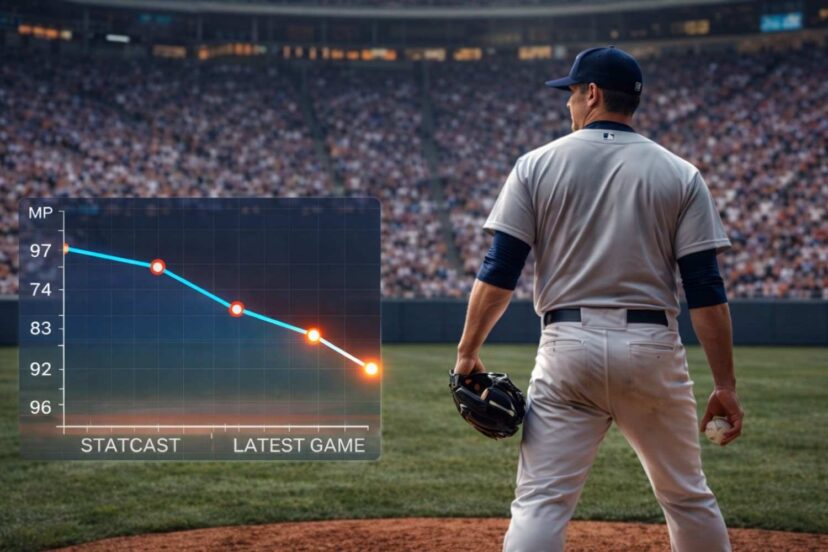
One of the most overlooked edges in baseball betting comes from something that happens right in front of us every single game – pitch velocity. While most bettors focus on ERA, win-loss records, or recent results, there is often a more immediate indicator of trouble brewing beneath the surface. A small drop in velocity can signal fatigue, mechanical issues, or even the early stages of an injury.
In this article, we are going to walk through exactly how to bet against MLB pitchers with velocity drop using simple, repeatable steps backed by Statcast data. The goal is not to overcomplicate things, but to identify early warning signs before the betting market fully adjusts. When used properly, this approach can uncover value spots that take just minutes per day to find.
Why Velocity Matters More Than Most Bettors Think
Before building a system around velocity, it is important to understand why it matters so much. Pitch velocity is directly tied to how effective a pitcher can be, especially when it comes to limiting hard contact and generating swings and misses.
When a pitcher loses even one mile per hour on their fastball, the effect can be more significant than most people realize. Hitters have more time to react, which often leads to better contact quality. That, in turn, increases the likelihood of extra-base hits, longer innings, and ultimately more runs allowed.
Another important factor is how velocity works in combination with other pitches. A fastball that drops from 96 MPH to 94 MPH makes off-speed pitches easier to recognize. That subtle shift can reduce strikeout rates and increase balls put into play.
The betting market does not always react immediately to these changes. Sportsbooks often rely on surface-level stats and general performance trends, which means a pitcher can appear “fine” on paper while underlying indicators suggest otherwise. That gap is where opportunity exists.
What Counts as a Meaningful Velocity Drop
Not every dip in velocity is worth acting on. Pitchers can fluctuate slightly from start to start due to normal variation. The key is identifying when that drop becomes meaningful enough to signal a potential decline in performance.
To make this approach consistent and repeatable, you need clear guidelines. The following thresholds provide a strong foundation for evaluating velocity changes:
Before applying these thresholds, it is important to compare recent performance against a stable baseline. That baseline is typically the pitcher’s season average fastball velocity.
When evaluating changes, a drop of around 1.0 MPH should be treated as an early warning sign. This alone is not enough to trigger a bet, but it tells you the pitcher is worth monitoring more closely in upcoming starts.
A drop in the range of 1.5 to 2.0 MPH becomes much more actionable. At this point, the pitcher is likely dealing with fatigue or mechanical issues, and performance can begin to decline quickly.
Once the drop reaches 2.0 MPH or more, it often signals a strong fade candidate. At this level, the pitcher is no longer performing at their usual baseline, and opposing hitters are likely to benefit.
It is also important to look at trends rather than a single outing. Comparing the last two or three starts against the season average provides a clearer picture of whether the drop is temporary or part of a developing pattern.
Where to Find Velocity Data Using Statcast
One of the best parts of this strategy is how accessible the data is. You do not need expensive tools or subscriptions. Statcast data is widely available and easy to interpret once you know where to look.
To begin, head to Baseball Savant or a similar site that provides pitch tracking data. Search for the pitcher you are evaluating and locate their average fastball velocity. This number is usually displayed by game or by rolling averages.
The process itself is simple, but consistency is what makes it effective. Start by identifying the pitcher’s season average velocity. Then look at their last start and compare the numbers directly. If you want a more reliable read, review the last two or three starts and calculate a rough average.
The goal is not to overanalyze every detail. Instead, you are looking for clear and noticeable changes. If a pitcher who typically throws 95.5 MPH is now sitting around 93.8 MPH over multiple starts, that is a signal worth paying attention to.
Once you get comfortable with this process, it becomes something you can do quickly as part of your daily routine. In most cases, reviewing a full slate of games takes no more than five to ten minutes.
The Betting Angle: How to Bet Against MLB Pitchers With Velocity Drop
Now that you understand how to identify velocity drops, the next step is turning that information into a betting strategy. The goal is to keep things simple and repeatable so that you can apply it consistently over the course of a season.
Before placing any bets, you want to confirm that the velocity drop meets your defined thresholds and shows a clear trend rather than a one-game fluctuation. Once that is established, the next step is evaluating the matchup.
Start by looking at the opposing lineup. You do not need an elite offense, but you should avoid teams that consistently struggle to score runs. A league-average or better offense is usually enough to take advantage of a declining pitcher.
Next, consider the environment. Ballpark factors can play a role in how much damage a struggling pitcher allows. Games played in neutral or hitter-friendly parks tend to increase the likelihood of offensive production.
When it comes to the actual wager, there are two primary approaches. The first is betting the opposing team’s moneyline. This is the most straightforward way to capitalize on a pitcher who may be underperforming.
The second option is targeting team totals. If you believe the pitcher is likely to allow multiple runs, betting the opposing team’s total to go over can provide additional value, especially if the bullpen behind the starter is also unreliable.
This is where understanding how to bet against MLB pitchers with velocity drop becomes powerful. You are not relying on public narratives or recent box scores. Instead, you are acting on a measurable change that often appears before results fully reflect it.
When Not to Use This Strategy
No system works in every situation, and recognizing when to step back is just as important as identifying when to act. There are several scenarios where a velocity drop may not carry the same meaning.
Cold weather is one of the most common factors. Early in the season or in certain ballparks, lower temperatures can naturally reduce velocity. In these cases, the drop may not indicate a true decline in performance.
Another situation to be cautious with is pitchers returning from injury. A pitcher easing back into action may not be throwing at full effort yet, but that does not necessarily mean they are ineffective.
Short outings can also distort the data. If a pitcher only throws a limited number of pitches in a game, the velocity reading may not be representative of their normal performance.
Finally, some elite pitchers are capable of adjusting even when their velocity dips slightly. While the drop is still worth noting, it may not carry the same predictive value as it would for a mid-tier pitcher.
Adding an Extra Layer to Strengthen the Edge
While velocity alone can be a strong indicator, combining it with other metrics can make the strategy even more effective. The idea is to confirm that the drop in velocity is also impacting performance in measurable ways.
One way to do this is by checking hard-hit rates. If hitters are making more solid contact, it supports the idea that the pitcher is becoming easier to hit.
Another useful metric is strikeout rate. A decline in strikeouts can signal that the pitcher is losing the ability to overpower hitters.
You can also look at spin rate trends if available. A drop in spin rate combined with lower velocity can further reduce pitch effectiveness.
By layering these factors together, you move from a simple observation to a more complete evaluation. This does not need to be overly complicated. Even a quick glance at one or two supporting metrics can add confidence to your decision.

Real Game Example
To see how this works in practice, consider a hypothetical example based on common patterns observed during the season.
Imagine a starting pitcher with a season average fastball velocity of 95.8 MPH. Over his last two starts, his velocity drops to 94.2 MPH and then 93.9 MPH. This puts him well within the actionable range.
In his next outing, he faces a team with a solid offensive profile in a neutral ballpark. The betting line lists his team as a slight favorite based on overall season performance.
At this point, the underlying data tells a different story than the surface-level stats. The pitcher is no longer performing at his usual level, and the opposing lineup is capable of taking advantage.
A bet on the opposing team’s moneyline or team total provides an opportunity to capitalize on that gap. Over time, these situations can add up, especially when identified consistently.
Why This Edge Exists
The reason this approach works comes down to how information is processed in the betting market. Most bettors rely on easily visible statistics such as ERA, recent results, and team records. These numbers tend to lag behind real-time changes in performance.
Velocity, on the other hand, updates immediately. It reflects what is happening right now rather than what has already happened. This creates a window where the data suggests a decline, but the market has not fully adjusted.
By focusing on this type of information, you position yourself ahead of the curve. You are not reacting to outcomes – you are identifying changes that can lead to future outcomes.
Bankroll Strategy for This Angle
Even with a strong edge, discipline is essential. This strategy should be approached as part of a long-term process rather than a short-term gamble.
A unit-based betting system works well here. Whether you choose flat betting or a structured approach, the key is consistency. Avoid increasing wager sizes based on short-term results.
It is also important to track your performance over a full season. Individual bets can vary, but the goal is to evaluate how the strategy performs across a larger sample.
By keeping your approach steady and measured, you give the system the best chance to produce meaningful results over time.
Conclusion
Pitch velocity is one of the clearest early indicators of a pitcher’s true condition, yet it remains underutilized by many bettors. A consistent drop in velocity can signal trouble before it becomes obvious in traditional statistics.
By learning how to bet against MLB pitchers with velocity drop, you gain access to a simple and repeatable edge that fits easily into a daily routine. It does not require complex models or hours of research – just a few minutes of focused analysis.
When applied with discipline and tracked over time, this approach can uncover valuable opportunities throughout the season. Like any strategy, it works best when used consistently and with clear guidelines, allowing you to stay one step ahead of the market.
Before You Go…
Get Weekly Winning Angles Delivered to You
Enjoy this article? Join the Core Sports Betting newsletter where we break down actionable strategies, betting angles, and real-game insights.
Some of the concepts we touch on each week can evolve into full handicapping systems – the kind you can test, refine, and potentially build into long-term edges.
Simple. Practical. No fluff.
Proven Sports Betting Courses
Looking to go deeper?
Our step-by-step courses are built around structured systems – not guesses or opinions. Each course has been backtested over a minimum of 10 years, giving you a clear understanding of how the strategy has performed over time.
If you’re serious about improving your process, these courses show you exactly how to approach betting with discipline and structure.
Free Betting Calculators to Sharpen Your Edge
Want to make smarter, faster decisions?
Our free tools help you quickly calculate odds, payouts, and true value — without the guesswork.
Try these popular calculators:
- Moneyline Calculator
- Parlay Calculator
- No-Vig Odds Calculator (Find True Odds)
- Kelly Criterion Calculator
→ Visit the Betting Tools Hub to access all calculators
Like this article? Pin it on Pinterest!


More to Explore