Most sports bettors spend considerable time trying to determine which team will win, whether a point…
UFC Age Curve Betting: When Does Fighter Performance Typically Begin to Decline?
Age is one of the most interesting factors to consider when handicapping a UFC fight. Unlike many traditional sports, mixed martial arts allows athletes to remain competitive at a high level well into their thirties and sometimes their forties. Experience, technical ability, and fight intelligence can help older fighters overcome some of the physical advantages enjoyed by younger opponents. However, every fighter eventually faces the challenge of maintaining performance as their body ages.
Understanding UFC fighter age decline can help bettors identify situations where an established veteran may no longer be performing at the same level that made them successful earlier in their career. A fighter’s reputation, impressive record, or previous championship success does not necessarily reflect their current abilities.
The challenge is determining when age actually begins to affect performance. Does a fighter start declining at 30, 33, or 35? Do heavier fighters maintain their effectiveness longer than lighter fighters? And perhaps most importantly, can bettors use age-related performance patterns to identify potentially profitable wagering opportunities?
This article examines how UFC fighters age, which abilities tend to deteriorate, how age differences affect matchups, and how bettors can incorporate this information into their handicapping process.
What Is the UFC Fighter Age Curve?
An age curve describes how an athlete’s performance changes throughout their career. In most professional sports, athletes experience a period of physical development, reach their competitive peak, and eventually begin declining as they get older.
Mixed martial arts follows a similar general pattern, although the relationship between age and performance is particularly complicated.
A UFC fighter depends on several physical abilities, including speed, strength, endurance, reaction time, coordination, and durability. These qualities do not necessarily peak or decline at the same time.
For example, a fighter may begin losing some explosiveness while continuing to improve their defensive awareness, striking accuracy, and understanding of opponents. Years of experience can also help a veteran recognize situations that a younger fighter might struggle to anticipate.
This creates an important distinction between a fighter’s physical peak and competitive peak.
A fighter might be at their most explosive at 27 but become a more technically complete mixed martial artist at 32. Their overall effectiveness could improve even while certain physical qualities begin deteriorating.
For bettors, the objective is not simply identifying an older fighter. It is determining whether the fighter’s current combination of physical ability, technique, and experience remains sufficient to compete against a particular opponent.
At What Age Do UFC Fighters Typically Begin to Decline?
There is no universal age at which UFC fighters suddenly become less effective. However, historical performance patterns suggest that fighters generally become less successful as they progress through their thirties.
Many fighters enter their competitive prime during their late twenties and early thirties. During this period, they often possess a favorable combination of athletic ability, professional experience, and technical development.
As fighters move into their mid-thirties, maintaining that balance can become increasingly difficult.
Historical UFC age-group analyses have reported patterns similar to the following:
| Fighter Age | Historical Win Rate |
| 25–27 | 55.2% |
| 28–30 | 52.2% |
| 31–33 | 48.0% |
| 34–36 | 42.7% |
| 37 and older | 37.6% |
These figures represent reported historical results grouped by fighter age. They are descriptive averages rather than probabilities that apply to every fighter or matchup.
The overall pattern is noteworthy. Fighters in their mid-to-late twenties have historically performed better than fighters in their mid-to-late thirties.
However, these numbers require careful interpretation.
A 37-year-old former champion facing an inexperienced opponent is not necessarily at a disadvantage simply because fighters aged 37 and older have a lower historical win rate.
The quality of opposition, weight class, fighting style, career mileage, and individual abilities all influence the outcome.
Another consideration is that age-group results do not isolate aging itself. Older fighters may face different levels of competition, and fighters who remain in the UFC into their late thirties are not necessarily representative of everyone who competed at younger ages.
Nevertheless, the historical relationship provides a useful starting point.
Rather than treating 35 as a fixed cutoff, bettors can view the early-to-mid-thirties as a period when closer examination of a fighter’s recent performance becomes increasingly important.
Which Physical Abilities Decline First in Aging UFC Fighters?
Aging does not affect every aspect of mixed martial arts performance equally. Some fighters experience noticeable changes in movement or explosiveness, while others maintain their physical capabilities but struggle with durability or recovery.
Recognizing these changes can be more useful than relying on a fighter’s age alone.
The following four areas deserve particular attention when evaluating an aging UFC fighter.
Reaction Time and Defensive Awareness
Reaction time plays an important role in striking exchanges. Fighters must recognize incoming attacks, make defensive adjustments, and respond before their opponent can capitalize.
As athletes age, certain aspects of reaction speed may deteriorate. However, the timing and magnitude of those changes vary considerably between individuals.
For a UFC fighter, even a modest reduction in reaction speed could become important against an opponent who throws fast combinations or frequently changes attacking angles.
A useful warning sign is an older fighter repeatedly absorbing punches they previously avoided.
Bettors can examine recent fights to determine whether the athlete is getting caught more frequently during exchanges. UFC statistics such as significant strikes absorbed per minute and significant strike defense percentage can provide additional context.
It is important to distinguish declining reactions from poor defensive technique or facing better opponents.
Explosiveness and Movement
Explosiveness is particularly important for fighters who rely on quick takedown entries, rapid changes of direction, or sudden bursts of offense.
An aging wrestler may still possess excellent technique but struggle to close distance as quickly as before.
Similarly, a striker who previously depended on constant footwork may begin spending more time stationary or fighting with their back near the cage.
These changes can create opportunities for younger opponents who maintain a high pace and force repeated defensive movements.
When reviewing an older fighter, pay attention to whether their movement remains effective throughout the fight or becomes noticeably less dynamic after the opening round.
Cardiovascular Endurance
Conditioning is essential in mixed martial arts because fighters must repeatedly perform demanding physical actions while managing fatigue.
However, chronological age does not automatically mean poor cardiovascular endurance. Well-trained veterans can maintain excellent conditioning, and younger fighters can struggle with pacing.
The more useful question is whether a fighter’s recent performances reveal a change in their ability to sustain activity.
For example, an older fighter who previously maintained steady striking volume across three rounds might now become significantly less active after the first.
Bettors should examine whether this pattern occurs repeatedly and whether it can be explained by opponent pressure, grappling exchanges, injuries, or changes in fighting strategy.
Durability and Recovery
Durability is another important consideration, especially for fighters who have competed professionally for many years.
An athlete with a long history of difficult fights may have accumulated substantial physical damage.
Repeated knockout losses, serious injuries, and prolonged recovery periods can affect a fighter’s ability to compete effectively.
However, a fighter’s knockout history should not be treated as a simple measurement of their ability to absorb punches.
The circumstances of each stoppage matter, including the opponent, the type of strike, and whether defensive mistakes contributed to the finish.
For bettors, durability becomes especially relevant when an aging fighter faces an opponent with considerable finishing ability.
Does UFC Fighter Age Decline Differ by Weight Class?
Weight class can influence how fighters age because different divisions place different demands on speed, power, movement, and endurance.
Lighter fighters often compete at a high pace, using frequent combinations, quick footwork, and rapid transitions between striking and grappling.
When a fighter relies heavily on these abilities, losing a small amount of speed or explosiveness may affect their effectiveness.
Heavyweight fighters frequently compete at a different pace. Individual punching power, positioning, and technical experience can play substantial roles in determining the outcome.
This may allow certain heavyweight veterans to remain competitive longer than fighters whose styles depend on continuous movement.
However, it would be a mistake to assume that all heavyweights age better than lighter fighters.
The relationship between age and performance depends on the individual athlete, their style, and the quality of their opponents. Differences in divisional depth and matchmaking can also influence historical results.
For betting purposes, weight class should be treated as an additional consideration rather than a reason to ignore age-related decline.
A 36-year-old heavyweight with an economical counterpunching style may present a different aging profile from a 36-year-old bantamweight who depends on speed and constant offensive pressure.
How Much Does an Age Gap Matter in UFC Betting?
One of the simplest ways to investigate age-related betting opportunities is to compare the ages of two fighters scheduled to compete.
A matchup between a 26-year-old prospect and a 38-year-old veteran immediately raises questions about athleticism, durability, experience, and current form.
Historical UFC analyses have found that younger fighters tend to win more frequently when the age difference between opponents becomes substantial.
For example, one historical analysis reported that younger fighters won approximately 59% of matchups involving an age difference of at least two years, with the percentage increasing when the age gap became particularly large.
These findings suggest that age differences may contain useful information about competitive performance.
However, a higher historical win percentage does not automatically translate into a profitable betting strategy.
Consider a hypothetical system in which younger fighters win 60% of their matchups.
If a bettor consistently wagers on those fighters at average odds of -200, the strategy would lose money despite winning more fights than it loses.
At -200 odds, a bettor must win approximately 66.7% of wagers just to break even before accounting for any additional costs.
The important question is whether the sportsbook’s price accurately reflects the younger fighter’s chances of winning.
Age gaps can help bettors identify potentially interesting matchups, but the odds ultimately determine whether a wager offers value.
Five Warning Signs That an Older UFC Fighter May Be Declining
Chronological age provides a starting point, but observable changes in performance can offer more meaningful information.
A fighter who is 37 and still competing effectively may be a better betting option than a 32-year-old whose recent performances show substantial deterioration.
The goal is to identify patterns across several fights rather than making judgments based on a single disappointing performance.
The following five indicators can help bettors evaluate whether an aging fighter is beginning to lose effectiveness.
1. Declining Striking Output
Significant strikes landed per minute can provide insight into a fighter’s offensive activity.
Suppose a veteran previously averaged approximately five significant strikes landed per minute but has averaged only three across their most recent fights.
That reduction deserves investigation.
It could indicate slower movement, reduced endurance, greater hesitation, or difficulty creating offensive opportunities.
However, striking output can also change because of opponent style. A fighter facing several strong wrestlers may throw fewer strikes because they are concerned about takedowns.
Compare recent performances with earlier fights against similar opponents before concluding that age is responsible.
2. Increasing Strikes Absorbed
An aging fighter who begins absorbing more significant strikes may be experiencing defensive problems.
This is particularly concerning when accompanied by declining offensive output.
For example, a fighter who previously landed more significant strikes than they absorbed might begin consistently losing that statistical comparison.
To evaluate this trend, examine significant strikes absorbed per minute, defensive percentage, and the quality of recent opponents.
Watching fight footage can help determine whether the fighter is reacting more slowly, remaining stationary, or repeatedly making the same defensive mistakes.
3. Reduced Takedown Effectiveness
Wrestling can be physically demanding, particularly when fighters must repeatedly attempt takedowns against strong defensive opponents.
An older wrestler may struggle to complete takedowns that were previously reliable.
Bettors should examine takedown attempts, successful takedowns, and overall effectiveness during grappling exchanges.
A declining takedown percentage is not necessarily evidence of physical deterioration, especially if recent opponents possess excellent takedown defense.
The more concerning situation is when an older fighter repeatedly struggles to establish their preferred wrestling offense against opponents they would previously have been expected to control.
4. Problems Maintaining Performance in Later Rounds
Changes in late-round effectiveness can provide valuable information about conditioning and pace.
An older fighter might remain dangerous during the opening round but become significantly less effective as the fight progresses.
To investigate this possibility, compare the fighter’s offensive activity and defensive performance across rounds.
Look for repeated reductions in striking output, slower movement, and difficulty defending takedowns.
If similar patterns appear across multiple fights, the fighter may be struggling to maintain their previous workload.
However, distinguish between age-related limitations and unusually demanding fights that would exhaust almost any athlete.
5. Recent Knockout Losses and Accumulated Damage
A history of knockout losses can be an important consideration when evaluating a veteran fighter.
Repeated stoppages may raise concerns about defensive vulnerability, accumulated damage, and the risks associated with facing powerful strikers.
However, one knockout loss does not establish that a fighter’s durability has permanently deteriorated.
Bettors should examine the circumstances surrounding each loss, including the opponent’s ability, the type of finishing sequence, and the fighter’s performance before the stoppage.
A more concerning pattern involves repeated stoppages combined with worsening defensive statistics and declining overall effectiveness.
When several warning signs appear together, the possibility of age-related performance decline deserves greater attention.

How to Use UFC Age Curves When Evaluating Betting Odds
Understanding UFC fighter age decline becomes most useful when it helps bettors evaluate whether a sportsbook has correctly priced a matchup.
Age should not function as an automatic betting rule. Instead, it can help identify situations where additional research may uncover a difference between a fighter’s reputation and their current abilities.
Consider a hypothetical fight between a 37-year-old veteran and a 29-year-old challenger.
The veteran is a former title contender with considerable name recognition. Their opponent is less established but has demonstrated strong recent performances.
The sportsbook lists the veteran at -150 and the younger fighter at +130.
At -150, the veteran’s implied probability is 60%.
At +130, the younger fighter’s implied probability is approximately 43.5%.
These percentages total more than 100% because the sportsbook’s prices include a margin.
Now suppose the veteran has shown declining striking output, increasing defensive vulnerability, and difficulty maintaining pace in recent fights.
The younger opponent, meanwhile, has demonstrated consistent activity, strong conditioning, and the ability to pressure opponents.
After evaluating the matchup, a bettor might estimate that the younger fighter has a 48% chance of winning.
At +130 odds, the break-even probability is approximately 43.5%.
If the bettor’s 48% estimate is well-supported and reasonably accurate, the wager may offer positive expected value.
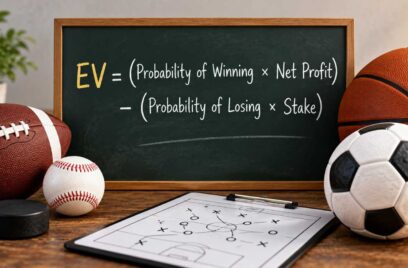
The estimated expected return on a $100 wager would be:
(0.48 × $130) − (0.52 × $100) = $10.40
That represents a hypothetical expected return of 10.4% on the amount risked.
Of course, this calculation is only as reliable as the bettor’s probability estimate. Assigning a 48% chance without sufficient evidence does not create an advantage.
The purpose of the example is to demonstrate how age-related research can contribute to a complete betting evaluation.
When Should Bettors Avoid Using Age as a Betting Factor?
Although aging is an important consideration, there are situations where it may provide relatively little useful information.
Some older fighters maintain excellent conditioning, adapt their techniques, and continue competing successfully against younger opponents.
Others benefit from favorable stylistic matchups that allow them to minimize the physical disadvantages associated with aging.
For example, an experienced submission specialist may still be dangerous against a younger opponent with questionable grappling defense.
Likewise, a technically disciplined counterstriker may not need to maintain the same offensive pace as an opponent who relies on constant movement.
Bettors should also avoid overreacting to a fighter’s most recent result.
A disappointing performance may reflect an injury, difficult stylistic matchup, short-notice preparation, or an unusually talented opponent rather than a permanent decline.
Age becomes more meaningful when supported by multiple indicators across several fights.
It is also important to consider how much age-related risk is already reflected in the betting line.
If the market has heavily discounted an older fighter because of widely recognized concerns, there may be little remaining value in betting against them.
In some cases, the older fighter could actually become the more attractive wagering option if the public and sportsbook market have overestimated the significance of their age.
Frequently Asked Questions About UFC Fighter Age Decline
What Is the Prime Age for a UFC Fighter?
Many UFC fighters perform particularly well during their late twenties and early thirties. However, competitive peak age varies depending on weight class, fighting style, professional experience, and individual development.
A fighter’s physical peak may occur before their overall competitive peak because technical ability and tactical awareness can continue improving with experience.
Do UFC Fighters Decline After Age 35?
Historical results generally suggest that UFC fighters become less successful as they progress through their mid-to-late thirties.
However, turning 35 does not automatically cause a fighter’s performance to deteriorate.
Some athletes remain highly competitive beyond that age, while others show signs of decline considerably earlier.
Do Younger UFC Fighters Win More Often?
Historical age-gap analyses generally indicate that younger fighters win more frequently when facing substantially older opponents.
However, the relationship varies across matchups, and younger fighters are not automatically profitable betting selections.
Bettors must compare the fighter’s realistic chances of winning with the odds being offered.
Does Age Matter More in Certain UFC Weight Classes?
Age may affect fighters differently depending on the physical demands of their division and fighting style.
Speed-dependent fighters in lighter divisions may be particularly vulnerable to losing explosiveness, while certain heavier fighters can remain effective through power, positioning, and experience.
Nevertheless, individual performance and matchup characteristics are more informative than relying on weight class alone.
Conclusion: Understanding UFC Fighter Age Decline
Age is an important consideration in UFC handicapping, but it should never be the only factor used to evaluate a matchup.
Historical performance patterns suggest that fighters generally become less successful as they progress through their thirties, although the timing and severity of decline vary considerably.
Bettors can gain a better understanding of an aging fighter by examining striking statistics, defensive performance, wrestling effectiveness, conditioning, durability, and recent opposition.
Ultimately, understanding UFC fighter age decline is most valuable when it helps identify differences between a fighter’s established reputation, their current competitive ability, and the probability implied by the betting odds.
The objective is not simply to bet against older fighters. It is to recognize when age-related changes may create a wagering opportunity that the market has not fully accounted for.
Before You Go…
Get Weekly Winning Angles Delivered to You
Enjoy this article? Join the Core Sports Betting newsletter where we break down actionable strategies, betting angles, and real-game insights.
Some of the concepts we touch on each week can evolve into full handicapping systems – the kind you can test, refine, and potentially build into long-term edges.
Simple. Practical. No fluff.
Proven Sports Betting Courses
Looking to go deeper?
Our step-by-step courses are built around structured systems – not guesses or opinions. Each course has been backtested over a minimum of 10 years, giving you a clear understanding of how the strategy has performed over time.
If you’re serious about improving your process, these courses show you exactly how to approach betting with discipline and structure.
Free Betting Calculators to Sharpen Your Edge
Want to make smarter, faster decisions?
Our free tools help you quickly calculate odds, payouts, and true value — without the guesswork.
Try these popular calculators:
- Moneyline Calculator
- Parlay Calculator
- No-Vig Odds Calculator (Find True Odds)
- Kelly Criterion Calculator
→ Visit the Betting Tools Hub to access all calculators
Like this article? Pin it on Pinterest!


More to Explore