Golf tournaments present bettors with a challenge that is different from many other sports. The playing…
Zone Entries NHL Betting: How Controlled Zone Entries Can Help You Find Better Betting Opportunities
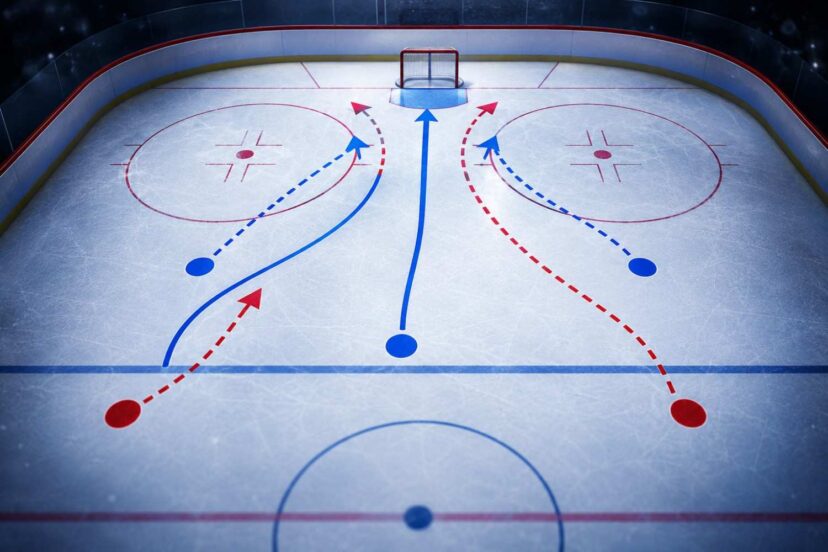
When most hockey bettors evaluate an NHL matchup, they focus on familiar statistics such as goals scored, shots on goal, power-play percentage, penalty kill efficiency, and recent win-loss records. While those numbers certainly have value, they often tell only part of the story. Many of the best offensive opportunities begin long before a shot is ever taken, and understanding those earlier moments can provide valuable insight that traditional statistics sometimes overlook. That is where zone entries NHL betting becomes an interesting tool for bettors looking to make more informed decisions.
Teams that consistently move the puck into the offensive zone while maintaining possession often generate more dangerous scoring opportunities than teams that rely heavily on dumping the puck into the zone. Over the course of an 82-game season, these small differences can become meaningful trends that help identify undervalued teams, potential regression candidates, and favorable matchups. While zone entries NHL betting should never be the only factor behind a wager, it can become an important part of a larger handicapping process.
This guide explains what zone entries are, why they matter, how they influence offensive production, and how bettors can use this information alongside other advanced hockey statistics to improve their analysis.
What Are Zone Entries?
A zone entry occurs whenever an attacking team successfully moves the puck across the opponent’s blue line into the offensive zone. While that may sound simple, the manner in which the puck enters the zone often has a significant impact on what happens next.
Generally speaking, there are two primary types of zone entries:
- Controlled entries (carry-ins or completed passes across the blue line)
- Dump-ins (sending the puck deep into the offensive zone without maintaining possession)
The difference between these two approaches may seem minor during a fast-paced game, but over hundreds or even thousands of possessions, the results can vary considerably.
A controlled entry allows the attacking team to immediately begin creating offensive pressure. Players are already in position to pass, shoot, or cycle the puck while maintaining possession.
A dump-in, on the other hand, intentionally gives up immediate possession in hopes of recovering the puck through forechecking. While this strategy certainly has its place, it generally produces fewer quality scoring opportunities than entering the zone with control.
Understanding this distinction helps explain why analysts have become increasingly interested in tracking zone entries over the past decade.
Why Zone Entries Matter More Than Many Traditional Statistics
Many traditional hockey statistics measure what happens after offensive pressure has already been established. Zone entries help explain how that pressure was created in the first place.
This is one reason advanced analysts often place significant value on transition play. Teams that consistently enter the offensive zone with possession usually spend more time attacking rather than chasing the puck.
Several advantages commonly result from successful controlled entries.
Better Offensive Possession
Carrying the puck across the blue line allows players to immediately begin setting up offensive plays. Instead of battling along the boards to recover a dumped puck, the offense already controls possession and can attack quickly.
Maintaining possession often leads to longer offensive-zone shifts and forces defenders to remain on the ice for extended periods.
Higher-Quality Scoring Opportunities
A controlled entry frequently produces shooting opportunities from dangerous areas of the ice.
Rather than taking low-percentage shots from the perimeter, players have more options to attack the slot, create cross-ice passes, or generate rebounds close to the net.
These opportunities generally produce higher expected goal values than shots taken immediately after winning a puck battle.
Reduced Defensive Pressure
When defenders are forced to respect a controlled rush, they often back into their own zone to prevent odd-man opportunities.
This extra space allows skilled forwards to make better decisions with the puck and gives trailing teammates more time to join the attack.
Carry-Ins Versus Dump-Ins
Perhaps the most important concept surrounding zone entries involves understanding the difference between carrying the puck into the zone and dumping it behind the defense.
Neither method is inherently right or wrong. Coaches often choose one or the other based on personnel, game situation, fatigue, or opponent tendencies.
However, over large samples, controlled entries generally produce more offense.
Carry-Ins
When players skate the puck into the offensive zone while maintaining possession, several offensive advantages immediately become available.
The puck carrier can attack defenders one-on-one, pass to teammates entering the zone, or delay long enough for additional offensive support to arrive.
This flexibility forces defenders to react rather than dictate play.
Skilled offensive teams often excel because multiple players can carry the puck through the neutral zone while making quick decisions under pressure.
Teams with elite puck-handling forwards frequently generate more sustained offensive pressure because they rely on controlled entries instead of repeatedly surrendering possession.
Dump-Ins
Dump-ins remain an important part of NHL strategy.
There are situations where sending the puck deep is absolutely the correct decision.
Examples include making a safe line change, avoiding an offside play, protecting a late lead, or facing a well-positioned defensive blue line.
The challenge for bettors is recognizing teams that rely almost exclusively on dump-ins because they struggle to gain the offensive zone with possession.
Those teams often need to win multiple puck battles simply to generate one quality scoring chance.
Over time, that usually becomes a less efficient offensive strategy than consistently entering with control.
How Zone Entries Influence Expected Goals
Expected goals, commonly referred to as xG, attempt to estimate how likely a particular shot is to become a goal.
Shots taken from directly in front of the net receive much higher expected goal values than low-angle shots from near the boards.
Controlled zone entries often lead directly to these higher-value scoring opportunities.
When a team enters the offensive zone with speed and possession, defenders frequently become spread out while trying to contain the rush.
That movement opens passing lanes through the middle of the ice and creates opportunities for one-timers, slot shots, rebounds, and odd-man situations.
Instead of settling for harmless perimeter shots, offenses can generate multiple dangerous attempts during the same possession.
This relationship explains why teams that consistently create controlled entries often rank highly in expected goals over the course of a season.
For bettors using zone entries NHL betting, combining zone-entry data with expected goals can provide a more complete picture of offensive performance than goals scored alone.
What Successful Zone Entry Teams Usually Have in Common
Rather than focusing on which teams currently rank highest, it is often more useful to understand the characteristics that produce strong transition play.
Several common traits appear among teams that consistently generate controlled entries.
These teams usually possess excellent skating ability throughout the lineup. Defensemen are comfortable moving the puck quickly, while forwards support one another through the neutral zone instead of standing still near the blue line.
Passing accuracy also plays an important role. Clean passes through the neutral zone reduce turnovers and allow attacking players to enter the offensive zone with speed.
Many successful transition teams also feature defensemen who actively join the rush. Their involvement creates additional passing options and forces opposing defenders to make difficult decisions regarding coverage.
Perhaps most importantly, these teams remain patient. Rather than forcing risky passes or immediately shooting from poor angles, they work to maintain possession until quality opportunities develop.
How Bettors Can Use Zone Entries
Understanding zone entries becomes much more valuable once you begin applying the information to actual betting decisions.
While no single statistic predicts game outcomes, zone-entry trends can highlight situations where public perception differs from underlying performance.
Several practical applications stand out.
Identifying Undervalued Teams
Some teams experience stretches where they generate excellent offensive pressure but simply cannot finish scoring chances.
Perhaps opposing goaltenders are playing exceptionally well, or perhaps shooting percentages temporarily fall below normal levels.
If those teams continue producing controlled zone entries while maintaining strong expected-goal numbers, their results may improve even if recent records appear disappointing.
This creates opportunities where sportsbooks—and many casual bettors—focus too heavily on recent wins and losses.
Spotting Regression Candidates
Regression is one of the most important concepts in sports betting.
A team riding an unusually high shooting percentage despite consistently struggling to enter the offensive zone may eventually experience declining offensive production.
Likewise, teams creating numerous controlled entries without scoring at expected rates may eventually see their goal totals increase.
Looking beyond final scores often reveals these hidden trends before they become obvious.
Evaluating Matchups
Every NHL game presents unique stylistic matchups.
One team may excel at entering the zone with speed, while the opposing defense struggles against fast transition attacks.
Another opponent may aggressively challenge puck carriers at the blue line, disrupting controlled entries before they develop.
Studying how offensive strengths match defensive tendencies can provide useful context beyond season-long averages.

Combine Zone Entries with Other Statistics
Although zone entries provide valuable information, they become much more powerful when combined with additional advanced statistics.
Successful handicapping rarely depends upon a single number.
Instead, bettors should build a complete picture using multiple sources of information.
Several complementary statistics work particularly well alongside zone-entry analysis.
Expected goals help determine whether offensive opportunities are genuinely dangerous rather than simply numerous.
High-danger scoring chances show how frequently teams create opportunities from premium shooting locations.
Corsi and Fenwick provide insight into overall puck possession and territorial advantage.
Offensive-zone time demonstrates which teams consistently sustain pressure after entering the zone.
Rush chances reveal how dangerous transition opportunities become once possession is established.
Penalty differential may create additional power-play opportunities for teams already strong in transition.
Rest days and travel schedules also matter because tired teams often struggle defending fast attacks through the neutral zone.
When several of these indicators point in the same direction, confidence in the overall handicap naturally increases.
Where Can You Find Zone Entry Data?
Finding quality hockey statistics has become much easier than it was a decade ago.
While not every website tracks zone entries directly, several respected analytics resources provide valuable information regarding transition play, possession, and offensive creation.
Useful resources include:
- NHL Edge
- Natural Stat Trick
- Evolving-Hockey
- HockeyViz
- Independent analyst databases
- Team tracking projects published throughout the season
Some sites may focus more heavily on expected goals or possession metrics than zone entries themselves. Even so, combining information from several trusted sources often provides a better overall understanding than relying on a single statistic.
As advanced tracking technology continues improving throughout the NHL, publicly available transition data will likely become even more detailed.
Common Mistakes Bettors Make
Advanced statistics become most valuable when interpreted correctly.
Many bettors misunderstand what zone entries actually indicate, leading to poor conclusions.
Several common mistakes deserve attention.
One mistake is assuming every controlled entry automatically produces a dangerous scoring chance. While controlled entries generally improve offensive efficiency, many possessions still end without a quality shot.
Another mistake involves ignoring opponent quality. A team may dominate zone entries against weaker competition but struggle against elite defensive clubs.
Some bettors also place too much emphasis on one recent game. Hockey contains substantial short-term randomness, making larger sample sizes much more reliable.
It is also important not to assume every dump-in is negative. Coaches intentionally dump the puck in many situations for perfectly valid strategic reasons.
Finally, avoid using zone entries in isolation. Combining transition data with expected goals, injuries, goaltending, special teams, scheduling, and recent form creates a much stronger betting process.
Final Thoughts
Modern hockey analytics continue revealing new ways to evaluate team performance beyond traditional box-score statistics. While goals, shots, and special teams remain important, understanding how offenses actually create opportunities can provide another layer of insight for bettors.
Learning zone entries NHL betting allows you to recognize teams that consistently generate controlled offensive possessions, create better scoring opportunities, and sustain pressure over time. When combined with expected goals, possession metrics, matchup analysis, and sound bankroll management, zone-entry analysis can become another valuable tool that helps you make more informed NHL betting decisions.
Before You Go…
Get Weekly Winning Angles Delivered to You
Enjoy this article? Join the Core Sports Betting newsletter where we break down actionable strategies, betting angles, and real-game insights.
Some of the concepts we touch on each week can evolve into full handicapping systems – the kind you can test, refine, and potentially build into long-term edges.
Simple. Practical. No fluff.
Proven Sports Betting Courses
Looking to go deeper?
Our step-by-step courses are built around structured systems – not guesses or opinions. Each course has been backtested over a minimum of 10 years, giving you a clear understanding of how the strategy has performed over time.
If you’re serious about improving your process, these courses show you exactly how to approach betting with discipline and structure.
Free Betting Calculators to Sharpen Your Edge
Want to make smarter, faster decisions?
Our free tools help you quickly calculate odds, payouts, and true value — without the guesswork.
Try these popular calculators:
- Moneyline Calculator
- Parlay Calculator
- No-Vig Odds Calculator (Find True Odds)
- Kelly Criterion Calculator
→ Visit the Betting Tools Hub to access all calculators
Like this article? Pin it on Pinterest!


More to Explore