A team fires 38 shots on goal and loses to an opponent that manages only 26…
Does Reach Matter in Boxing? A Bettor’s Guide to Reach Advantage
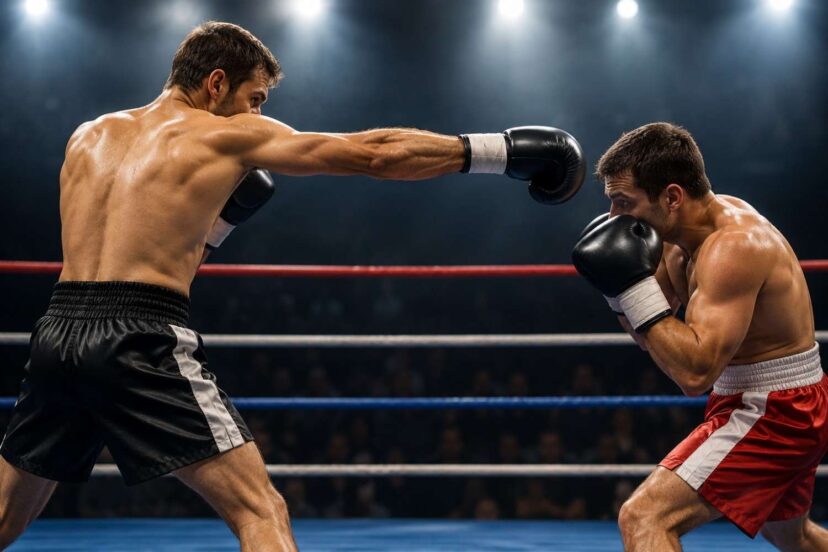
Boxing bettors have plenty of information to consider before placing a wager. Records, knockout percentages, age, recent opponents, fighting style, conditioning, and betting odds can all become part of the handicapping process. Yet one of the easiest statistics to notice is sitting directly on the tale of the tape: reach. If one fighter enters with a 76-inch reach and the other has a 71-inch reach, the five-inch difference immediately stands out. But does reach matter in boxing enough to influence which fighter you should bet? The answer requires more than simply comparing two measurements.
A reach advantage can be meaningful because it can allow a boxer to attack from a distance at which the opponent has difficulty returning punches. However, having longer arms and knowing how to turn that physical characteristic into an effective fighting advantage are two different things. Some boxers build their entire style around maintaining distance, establishing the jab, and forcing opponents to work their way inside. Others have impressive reach measurements but routinely give up that advantage by fighting at close range.
For bettors, that distinction is important. Reach should rarely be treated as a standalone betting system. Instead, it can be used as another piece of information that helps explain how a matchup might develop. The goal is not simply to identify which boxer has longer reach. The goal is to determine whether that boxer is equipped to make those extra inches matter.
What Does Reach Mean in Boxing?
A boxer’s listed reach generally refers to arm span, or the distance from the fingertips of one hand to the fingertips of the other when the arms are fully extended horizontally. It is commonly described as wingspan. Reach and height are related, but they are not the same measurement. Two fighters of identical height can have noticeably different reaches.
That distinction can become important when handicapping a boxing match.
Imagine two fighters who are both 5-foot-11. Fighter A has a 76-inch reach while Fighter B has a 71-inch reach. Looking only at height would suggest there is little physical difference between them. The reach measurements reveal something that height alone does not.
The next question is whether Fighter A can actually make use of that difference.
A fighter with longer reach potentially has the ability to land a jab or straight right hand while remaining outside the comfortable punching range of a shorter opponent. That can force the shorter fighter to cover additional distance before launching an attack.
It sounds like a significant advantage, and sometimes it is. The mistake is assuming that it always is.
Why Reach Can Matter to Boxing Bettors
To understand the potential betting value of reach, think about what a longer reach can allow a fighter to accomplish rather than focusing only on the measurement.
A skilled outside boxer can use a jab to establish the distance at which the fight takes place. Each time the shorter fighter attempts to move forward, the longer fighter may be able to jab, move, reset, and make the opponent begin the process again.
Over several rounds, this can become frustrating and physically demanding for the shorter boxer.
The longer fighter may also have opportunities to land punches without immediately entering the opponent’s best punching range. If a boxer can repeatedly score with a jab or straight punches while limiting clean return shots, the reach difference has become a functional advantage rather than simply a physical measurement.
Reach can also influence defense. Maintaining distance can give a fighter additional space to react to attacks. Instead of relying entirely on blocking, slipping, or trading punches, the fighter may be able to avoid some exchanges simply by controlling where they occur.
However, bettors should separate physical reach from effective fighting range.
A boxer can have long arms without being particularly good at maintaining distance. Another fighter may have shorter arms but exceptional footwork, timing, head movement, and an ability to enter punching range without taking much damage.
That is why the more useful handicapping question is not, “Who has longer reach?”
It is, “Which fighter is more likely to control the distance?”
When Reach Advantage Matters Most in Boxing Betting
If you are asking does reach matter in boxing, there are certain matchup characteristics that can make the answer much closer to yes. A reach advantage becomes more interesting when several other pieces of the matchup support it.
Rather than treating any specific number of inches as an automatic betting signal, look for evidence that the longer fighter possesses the tools necessary to turn the measurement into actual ring control.
The Longer Fighter Uses an Effective Jab
The jab is one of the first areas I would examine when evaluating a reach advantage.
A fighter with longer reach who regularly establishes a jab has a practical method for using that physical advantage. The jab can score, interrupt an opponent’s forward movement, create openings for power punches, and help maintain preferred distance.
When studying previous fights, don’t just count how often the boxer throws the jab. Watch what happens after it lands.
Does the opponent have to reset?
Does the boxer follow the jab with a straight right hand?
Does the jab prevent opponents from moving comfortably into range?
Does the boxer use the jab while moving backward?
Does the fighter continue using it throughout the fight, or abandon it when pressured?
These details can tell you much more than the reach number itself.
A five-inch reach advantage attached to an excellent jab can be important. The same five inches attached to a fighter who rarely jabs may have far less handicapping value.
The Longer Fighter Has Good Footwork
Reach becomes considerably more useful when combined with movement.
A longer fighter who can jab, move laterally, reset, and establish distance again can make a shorter opponent continually work to get close enough to punch.
Watch how the longer fighter reacts when an opponent advances.
If the boxer repeatedly backs straight toward the ropes, the available space eventually disappears. Once trapped near the ropes or in a corner, the fighter’s reach advantage may become much less useful.
A boxer who pivots or moves laterally can be more difficult to trap. Instead of simply retreating, the fighter changes the angle and creates additional space.
This combination of reach and footwork is much more interesting from a betting perspective than reach alone.
The Shorter Fighter Struggles to Close Distance
Evaluating the shorter fighter may be just as important as evaluating the boxer with longer reach.
Search previous fights for opponents with similar physical dimensions and styles. You are trying to determine how successfully the shorter fighter handles the exact problem they are about to encounter.
Pay particular attention to whether the fighter can get past a jab without absorbing repeated clean punches. Look at whether they cut off the ring or simply follow opponents around it. Examine their head movement as they move forward and whether they can force exchanges once they finally get inside.
If a shorter fighter has repeatedly struggled against opponents who maintain distance well, a significant reach disadvantage deserves additional attention.
If the fighter has repeatedly solved that problem, the raw reach difference becomes less concerning.
Height and Reach Point in the Same Direction
Reach and height should be evaluated separately, but sometimes they reinforce each other.
Consider a boxer who is three inches taller and has a five-inch reach advantage. That can present a different challenge than facing an opponent of equal height who simply happens to have longer arms.
The shorter fighter may need to overcome both distance and punching angles to establish comfortable exchanges.
Again, the physical measurements don’t determine the outcome. They tell you what to investigate.
If the taller, longer fighter is also skilled at fighting from the outside, the physical differences become more relevant.
When Reach Advantage Doesn’t Matter as Much
There is another side to this analysis. Sometimes a large reach advantage attracts attention but contributes surprisingly little to how the fight actually unfolds.
Recognizing these situations may prevent bettors from placing too much weight on an obvious physical advantage.
The Shorter Fighter Is an Effective Pressure Fighter
Some boxers are specifically equipped to fight opponents who want distance.
An effective pressure fighter doesn’t simply walk forward. They may use head movement, feints, angles, footwork, and body punches to gradually take away space.
There is an important difference between following a boxer and cutting off the ring.
Following allows the outside fighter to continue circling.
Cutting off the ring attempts to anticipate where the opponent is moving and reduce the available space.
Once a shorter fighter gets inside, the geometry of the matchup changes. The longer boxer may no longer have enough space to fully extend straight punches. Hooks, uppercuts, body punches, clinches, and short exchanges become more important.
At that distance, having longer arms may provide much less benefit.
The Longer Fighter Doesn’t Use the Reach
This may be the biggest warning sign of all.
Never assume that a fighter will use an attribute simply because they possess it.
Watch the fights.
A boxer might have a 78-inch reach and still willingly stand at mid-range trading hooks. Another might repeatedly allow opponents to walk inside without establishing the jab. Some fighters naturally enjoy exchanges and abandon distance as soon as they are hit.
If this behavior appears consistently across previous fights, there is little reason to assume the boxer will suddenly become a disciplined outside fighter simply because the upcoming opponent has shorter arms.
For betting purposes, handicap what the fighter actually does rather than what their measurements theoretically allow them to do.
The Shorter Fighter Has Strong Head Movement and Footwork
Closing distance is dangerous when a fighter moves forward in a straight line with little defensive movement. A good jab can repeatedly punish that approach.
The situation changes when the shorter boxer can slip punches while advancing.
Head movement can make the longer fighter’s jab more difficult to establish. Good footwork can help the shorter boxer move into range more efficiently. Feints can create openings that allow the fighter to cross the dangerous area between outside range and close range.
This is why film study can be particularly useful when handicapping reach.
A spreadsheet can tell you that Fighter A has five inches of reach.
It cannot fully tell you whether Fighter B is excellent at slipping Fighter A’s favorite punch.
The Fight Is Likely to Take Place at Close Range
Reach generally becomes more useful when there is space between fighters.
If both boxers prefer fighting at close range, the reach difference may not have as much opportunity to influence the matchup.
This can also happen when the shorter fighter is physically strong enough to force the action inside or when the longer fighter willingly accepts close-range exchanges.
Before giving reach significant weight in your handicap, ask where you expect most of the fight to occur.
If your answer is “at the end of the longer fighter’s jab,” reach may be highly relevant.
If your answer is “against the ropes trading hooks and body punches,” it may be considerably less important.
The Betting Market Has Already Accounted for It
There is another issue that has nothing to do with boxing technique: price.
Finding an advantage is not the same thing as finding a good bet.
Suppose your analysis strongly favors Fighter A because of reach, jab effectiveness, movement, and the opponent’s difficulty closing distance. That might lead you to estimate Fighter A has a 65% chance of winning.
Now suppose the sportsbook is offering Fighter A at -300.
At American odds of -300, the break-even probability is 75% before considering other market factors. If your own fair probability is only 65%, you haven’t necessarily found value simply because you expect Fighter A to win.
This distinction is fundamental to sports betting.
The question is never only, “Who is more likely to win?”
You also need to ask, “Is the available price worth betting?”
How Much Reach Advantage Is Significant in Boxing?
Bettors naturally want a threshold. Is two inches enough? What about three? Should you start paying serious attention at four inches?
There isn’t a universal number that suddenly turns reach into a reliable betting signal.
A one-inch difference will usually deserve less attention than a five-inch difference, all else being equal. But “all else being equal” is precisely the problem. Boxing matchups rarely provide equal circumstances.
For practical handicapping, I would treat the reach difference as a research trigger rather than a betting rule.
A small one- or two-inch difference might be noted without changing your opinion much. Once the difference becomes several inches, it deserves more investigation. A very large difference should certainly get your attention, but it still shouldn’t automatically determine your wager.
Suppose Fighter A has a six-inch advantage but rarely jabs, has poor lateral movement, and struggles when pressured.
Now suppose Fighter B gives away six inches but has excellent head movement, consistently cuts off the ring, attacks the body, and has already defeated several longer opponents.
The six inches haven’t disappeared. They simply may not produce the advantage suggested by the tale of the tape.
A Boxing Reach Advantage Betting Checklist
A checklist can help prevent you from seeing an impressive reach number and immediately assigning too much importance to it. The purpose isn’t to make every answer a requirement. Instead, these questions force you to examine whether the reach difference fits the styles, tendencies, and betting price of the matchup.
Before making reach part of your final handicap, work through the following areas:
- Calculate the actual reach difference. Start by subtracting the shorter fighter’s listed reach from the longer fighter’s reach. Record the number rather than relying on visual impressions.
- Study the longer fighter’s jab. Watch several recent fights and determine how frequently and effectively the boxer establishes the jab. Pay attention to whether it controls opponents or is merely thrown without much effect.
- Evaluate distance management. Look at what happens when opponents move forward. Does the longer boxer pivot and maintain space, or retreat toward the ropes?
- Study the shorter fighter against length. Find previous opponents who had meaningful height or reach advantages. Those fights can provide clues about how well the boxer solves this particular problem.
- Evaluate ring-cutting ability. Determine whether the shorter fighter intelligently reduces space or simply follows moving opponents.
- Watch the shorter fighter’s head movement. A fighter who can slip the jab while advancing may be much better equipped to neutralize a reach disadvantage.
- Evaluate inside fighting. Ask which fighter benefits once the distance disappears. This can be especially important if you expect a pressure-heavy fight.
- Compare height as well as reach. A large reach difference combined with a meaningful height advantage may create a more complicated distance problem.
- Look at conditioning. Maintaining distance for a full fight requires movement and discipline. Determine whether the longer fighter historically maintains that style in later rounds.
- Compare your analysis with the betting price. Even when the reach advantage is legitimate, determine whether the sportsbook’s odds already require you to pay too high a price for it.
The most important part of the checklist is the combination of factors. You aren’t looking for one box to check. You are looking for a matchup in which multiple pieces of evidence point toward the same conclusion.

An Example of Handicapping a Reach Advantage
Consider a hypothetical fight between two boxers.
Fighter A stands 6-foot-1 with a 76-inch reach. He uses a high-volume jab, prefers fighting from the outside, and regularly circles away after throwing combinations.
Fighter B stands 5-foot-9 with a 71-inch reach. He is aggressive, throws powerful hooks and attacks the body, but has occasionally struggled to get inside against opponents with good jabs.
The first observation is obvious: Fighter A owns a five-inch reach advantage.
But that isn’t enough to place a bet.
The next step would be studying Fighter A’s previous fights. If he consistently uses the jab and lateral movement against aggressive opponents, the reach advantage begins to carry more weight.
Then study Fighter B.
Suppose previous fights show that Fighter B performs extremely well once inside but sometimes spends long stretches following mobile opponents while absorbing jabs. That is meaningful because the upcoming matchup may force him to solve the same problem.
Now the reach statistic has context.
The analysis is no longer:
Fighter A has five inches of reach, so bet Fighter A.
It becomes:
Fighter A has five inches of reach, consistently uses an effective jab, moves well enough to maintain distance, and is facing an opponent who has previously struggled to get inside against similar fighters.
That is a much stronger handicapping argument.
Now change one piece of the matchup.
Suppose Fighter A has the same five-inch advantage but consistently struggles when opponents pressure him. He backs straight toward the ropes, stops jabbing after a few rounds, and willingly exchanges at close range.
Suddenly the same five-inch reach difference is much less attractive.
Nothing about the measurement changed.
The matchup did.
Reach vs. Height: Which Matters More?
Bettors may also wonder whether height or reach deserves more attention.
Rather than choosing one, evaluate how the two interact.
Height can affect stance, punching angles, and the physical picture presented to an opponent. Reach more directly relates to the distance a fighter may be able to cover with straight punches. Yet neither measurement tells you how effectively the boxer fights.
A tall fighter can fight small.
A shorter fighter can be exceptional at controlling distance.
A long-armed fighter can waste their reach.
This is another reason physical statistics should be treated as descriptive information rather than automatic predictive signals.
If height, reach, jab effectiveness, movement, and opponent tendencies all support the same fighter, the overall case becomes more interesting.
Should You Bet on the Boxer With the Longer Reach?
Not automatically.
When considering does reach matter in boxing for betting purposes, the best answer may be that reach matters most when it confirms what the styles already suggest.
A long-reach boxer with an excellent jab, disciplined footwork, good conditioning, and an opponent who struggles to close distance presents a much more meaningful reach-based matchup than a boxer who simply happens to have long arms.
The betting price must then be considered.
This final step is easy to overlook. You could correctly determine that a fighter’s reach provides a significant advantage and still make a poor wager if the odds require a probability of winning that is higher than your own estimate.
That is why reach is better used as one component of a complete handicap.
Building a Reach-Based Boxing Betting Database
Bettors interested in testing this idea further could also turn reach into a backtesting project rather than relying entirely on observation.
A simple spreadsheet could track each fight, each fighter’s reach, the reach differential, closing moneyline, result, method of victory, and several style-related characteristics.
You could then separate fights into groups, such as a reach advantage of less than two inches, two to four inches, four to six inches, and more than six inches.
However, win percentage alone would not answer the betting question.
You would also want the odds.
If longer fighters win frequently but sportsbooks price them as heavy favorites, blindly betting the longer fighter could still lose money. A useful backtest should therefore calculate both win rate and return on investment.
From there, you could investigate more specific combinations. Does reach perform differently when the longer fighter is an underdog? What happens when a large reach advantage is paired with a height advantage? Does the effect change in fights that reach the judges? Does it become stronger when the longer boxer is a frequent jab user?
These questions move the idea from observation toward a testable betting strategy.
Most importantly, decide on your rules before reviewing the final results. Continually changing filters after seeing what happened can create a strategy that looks excellent historically but performs poorly going forward.
Final Thoughts: Use Reach as One Piece of the Handicap
So, does reach matter in boxing? It certainly can, but the raw number doesn’t tell the entire story.
Reach becomes most meaningful when a fighter has the technical ability and fighting style required to use it. An effective jab, good footwork, distance management, conditioning, and an opponent who struggles to close the gap can transform a physical measurement into a genuine matchup advantage.
The opposite is equally important. A large reach advantage can become far less meaningful when the longer fighter doesn’t jab effectively, struggles under pressure, willingly fights inside, or faces an opponent who is particularly skilled at closing distance.
For bettors, that leads to a simple principle:
Don’t let reach tell you who to bet. Let reach tell you what to investigate.
Before You Go…
Get Weekly Winning Angles Delivered to You
Enjoy this article? Join the Core Sports Betting newsletter where we break down actionable strategies, betting angles, and real-game insights.
Some of the concepts we touch on each week can evolve into full handicapping systems – the kind you can test, refine, and potentially build into long-term edges.
Simple. Practical. No fluff.
Proven Sports Betting Courses
Looking to go deeper?
Our step-by-step courses are built around structured systems – not guesses or opinions. Each course has been backtested over a minimum of 10 years, giving you a clear understanding of how the strategy has performed over time.
If you’re serious about improving your process, these courses show you exactly how to approach betting with discipline and structure.
Free Betting Calculators to Sharpen Your Edge
Want to make smarter, faster decisions?
Our free tools help you quickly calculate odds, payouts, and true value — without the guesswork.
Try these popular calculators:
- Moneyline Calculator
- Parlay Calculator
- No-Vig Odds Calculator (Find True Odds)
- Kelly Criterion Calculator
→ Visit the Betting Tools Hub to access all calculators
Like this article? Pin it on Pinterest!

More to Explore