Golf tournaments present bettors with a challenge that is different from many other sports. The playing…
Using Early-Week Injury Reports for Smarter Player Prop Betting
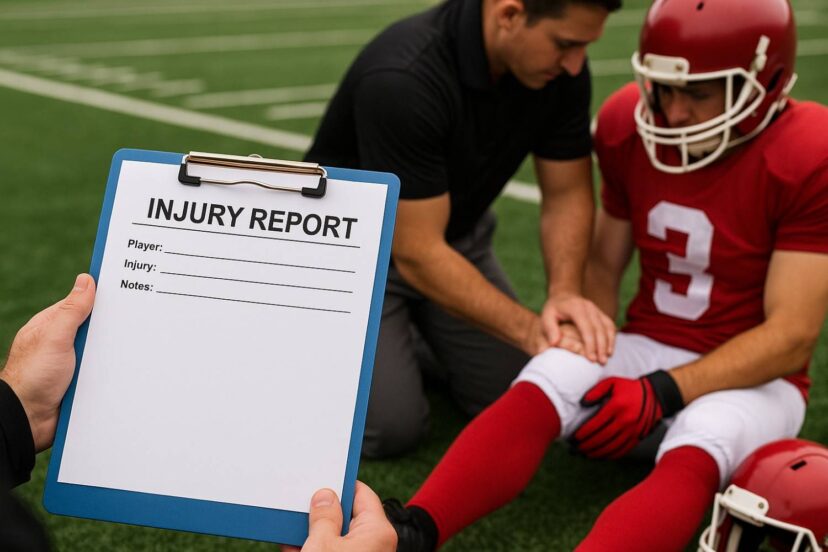
Every NFL handicapper knows that injury news can swing a game line, but far fewer understand just how powerful it can be in the player prop betting markets. In fact, the earliest injury reports – those released on Monday, Tuesday, and Wednesday – often hold the most exploitable information. Because they come before sportsbooks have fully adjusted their prop markets, these early-week reports let you act before the public catches on. This is exactly why understanding how to use early week NFL injury reports for player prop betting gives you a meaningful edge over recreational bettors and even many seasoned handicappers.
Sportsbooks shade lines early in the week based on fear, uncertainty, and perceived risk – not confirmed realities. A star WR who misses Wednesday practice may still be trending toward playing, but the books will often lower his yardage total or keep it off the board, creating early value. On the flip side, an offensive lineman’s Wednesday DNP (which most bettors ignore) can dramatically affect a running back’s projected efficiency or a quarterback’s pressure rate. Early-week injury analysis is all about learning to identify which “injury notes” matter, which ones don’t, and how they directly influence player usage, snap counts, and market pricing.
In this article, we’ll break down how injury reports are structured, what each practice designation actually signals for props, how sportsbooks react at different points of the week, and a step-by-step system for how to use early week NFL injury reports for player prop betting to find actionable edges. By the time you’re done reading, you’ll know how to interpret early-week injury data better than 99% of bettors.
Why Early-Week Injury Reports Matter So Much for Prop Betting
Early-week injury reports shape the foundation of the prop markets before the public ever sees the “final” status on Friday. Sportsbooks begin adjusting probabilities as soon as the first practice designation drops. Your goal as a bettor is to understand what those designations actually mean in the context of player role, team trends, and historical practice patterns.
Most casual bettors assume injuries only matter when a player is questionable on Friday. That’s completely wrong. Prop value – especially overs – often emerges far earlier in the week. Unders, meanwhile, may become juicy when a Wednesday injury note signals reduced usage before props are even posted.
Early-week injury analysis matters because:
- Props often open before beat reporters have interpreted injuries.
- The public doesn’t react to non-skill-position injuries, but props do.
- Injury clusters (multiple WRs or OL missing practice) create massive usage changes.
- Sportsbooks frequently overreact to early DNPs and underreact to practice upgrades.
- Lines move harder in the prop market than the side/total market.
Once you master the timing of these reports, you can predict how props will shift throughout the week and take positions early – before sportsbooks correct the line.
How NFL Injury Reports Are Structured (And What the Designations Really Mean)
Before we get into lists, it’s important to understand why injury reports are structured the way they are and what “DNP,” “Limited,” and “Full” actually tell you. Casual bettors assume these labels are static, but they carry different meanings depending on the day of the week, player history, and team tendencies.
Below is a breakdown of each practice day and what it means for your prop betting strategy.
Monday Injury Estimations
Monday injury reports are often estimated, meaning teams simply list what a player would have done had practice occurred. This is especially true for teams coming off Sunday night or Monday night games.
How to interpret Monday injury notes:
- A veteran star appearing as “DNP” is often rest—not actual injury.
- A surprise DNP for a typically durable player can signal something real.
- Skill players (WRs, RBs, TEs) listed as DNP are more concerning than QBs.
Use Monday reports to identify players you’ll monitor more closely on Wednesday and Thursday.
Wednesday Practice Report: The Most Important Day for Prop Bettors
Wednesday is the single most valuable day for prop bettors because it reveals the first real workload clues.
How to interpret Wednesday:
- Full: Expect normal workload. Props may open high or normal.
- Limited: Neutral but worth monitoring. Indicates the team isn’t overly worried.
- DNP: Major red flag unless the player always rests Wednesdays.
Why it matters:
Sportsbooks begin shaping their initial prop lines based on Wednesday participation – not Friday.
Thursday Practice Report: The Line-Movement Day
Thursday is the day props move hardest. When learning how to use early week NFL injury reports for player prop betting, Thursday is where you gain your richest signals.
Key insights:
- Upgrade from DNP to Limited = Strong sign the player will play.
- Downgrade from Limited to DNP = Very bad sign. Bet unders before books adjust.
- Backups missing practice become more critical for cluster injuries.
Sportsbooks often move lines on Thursday before releasing all props.
Friday Game-Status Report
Friday tells you the official status – but props usually move before Friday, and much of the value is already gone.
Statuses:
- Questionable: 70–80% likely to play today
- Doubtful: Almost always out
- Out: Props voided; look to alternative usage props (backup overs)
While Friday confirms things, most profitable edges come earlier.
The Hidden Injuries Sportsbooks React To (But Most Bettors Don’t)
Firstly, it’s important to understand that the most profitable prop edges come not from skill-player injuries, but from the injuries that shape how a game unfolds. Injuries to offensive linemen, slot corners, linebackers, tight ends, and rotational players often create predictable shifts in usage and efficiency – changes that sportsbooks are slower to respond to in the prop market.
Here are the specific injury types that carry outsized influence on props – along with how to act on them.
Offensive Line Injuries → QB Passing Yards, Sack Props, RB Efficiency
How to analyze:
Search for “offensive line injuries <team> Wednesday.” If multiple OL are Limited or DNP, props tied to quarterback efficiency or running ability drop.
How to use it:
- Take QB passing yard unders if 2+ OL are likely out.
- Take sack overs – same logic, especially vs aggressive pass rushes.
- Avoid RB over props unless they’re pass-catching backs.
Slot Corner Injury → Slot WR Overs
Slot corners rarely move spreads, but they significantly impact prop markets.
How to use it:
- Identify the WR who runs the most slot routes.
- If a slot CB is DNP on Wednesday/Thursday, take that WR’s receptions and yards overs early.
Backup RB or TE Injuries → Usage Spike for Starters
Usage is king in props.
How to use it:
- When a backup RB is out, starters often see 2–5 extra touches.
- When TE2 is out, TE1 gets more red-zone snaps and routes.
Grab overs before books adjust snap projections.
Front-Seven Injuries → RB Overs
LB/DT injuries increase rushing efficiency.
How to use it:
- If a team’s top LB is DNP on Wednesday, bet the opposing RB rushing yards over early.
- Efficiency spikes often happen before books update models.
Cluster Injuries → Props Explosion or Collapse
“Cluster injuries” mean multiple players in one position group are hurt.
How to use it:
- Missing 2–3 WRs? Expect WR1 and TE1 overs.
- Missing multiple DBs? Look for QB and WR overs.
- Missing multiple OL? Prioritize QB unders.
Cluster injuries move props more than spreads.

A Step-by-Step System for How to Use Early Week NFL Injury Reports for Player Prop Betting
Before listing the steps, it’s fairly important to understand that good injury-based prop betting isn’t just about reading practice designations – it’s about following a repeatable workflow. This framework gives you a structured way to find edges every single week and react before sportsbooks move.
Below is a method you can apply immediately.
Step 1: Identify All Monday or Wednesday DNPs of Interest
How to do it:
- Look at official team injury reports.
- Focus on skill players, OL, CBs, LBs, and key rotational defenders.
- Make a shortlist of players you’ll track through Thursday.
This week-long tracking is where your edge begins.
Step 2: Evaluate the Type of Injury
Not all injuries have equal effect on props.
How to analyze:
- Soft tissue: Tend to limit usage (hamstring, groin).
- Concussion: Clear, structured protocol – easy to predict availability.
- Upper body: Less impact on snap share.
- Illness: Usually irrelevant unless lingering (flu outbreaks, dehydration).
- Veteran rest: Often meaningless.
Your goal is to separate “noise” from meaningful signs.
Step 3: Read Beat Reporter Context (This Is What Pros Do)
Beat reporters interpret coach-speak better than national media.
How to check:
- Search Twitter/X for “<player name> practice video.”
- Read replies to team reporters (they often post insights).
- Look for exact wording: “should play,” “trending upward,” or “expected to sit.”
This context often predicts line movement before it happens.
Step 4: Predict Sportsbook Movement
Understanding when lines will move is crucial.
How to anticipate movement:
- Wednesday DNP for a star WR → books lower props or delay release.
- Thursday upgrade → grab overs immediately.
- Thursday downgrade → grab unders immediately.
- Multiple OL out → QB unders tighten by Friday.
Predicting line movement is where profit happens.
Step 5: Compare Participation to Expected Usage
Usage beats talent in props.
How to analyze:
- Look at player’s snap share trends (Pro Football Reference).
- Look at target share or route participation (PFF/FTN).
- Check matchup vs backup defenders.
A player trending toward normal usage despite injury concerns often creates early value.
Step 6: Bet Early When the Book Overreacts to Fear
Early-week value is often found when books overreact to a player’s DNP.
Examples:
- WR misses Wednesday with rest → line drops → bet WR overs.
- RB listed Limited early week → rushing yards drop → bet overs based on context.
Grab props when sportsbooks fear an injury more than the team does.
Step 7: Bet Late When the Injury Trend Turns Negative
If a player shows worsening practice trends:
- Limited → DNP
- Full → Limited
- “Will test pre-game” quotes
How to act:
- Immediately bet unders.
- Books are slow to shade low-volume props.
- Consider related props (backup overs, opposing defensive props).
Late-week injury collapses create enormous under value.
When NOT to Bet Props Based on Injury Reports
Please keep in mind that injury-based betting is powerful – but, no, it is not foolproof. Some “injuries” are decoys, misreads, or strategically meaningless. Knowing what to avoid is just as profitable as finding value.
Here are situations where injury report signals don’t exactly translate into an edge:
When a Player Always Rests Wednesdays
Veteran maintenance days mean nothing. Don’t overreact.
When the Injury Doesn’t Affect Usage
Examples:
- A WR with a finger injury
- A RB with an illness
- A TE with a shoulder bruise but full routes
If usage won’t change, avoid forcing a bet.
When Weather Overrides Injury Edges
Sometimes weather is simply more important – especially for passing props.
When the Team Has No History of Honest Injury Reporting
Some coaches tend to list players for gamesmanship. Avoid leaning too heavily on early-week designations.
When Books Release Props Too Late for Meaningful Injury Value
If props are posted Friday afternoon, the injury edge is already gone.
Conclusion
Early-week injury reports are one of the most exploitable – and misunderstood – tools in the NFL prop betting world. By learning how to use early week NFL injury reports for player prop betting, you can anticipate line movement, uncover hidden usage trends, and bet into inefficient early-week markets before sportsbooks sharpen their projections. The key is understanding practice patterns, injury types, and the specific ways non-skill-player injuries influence props. If you track these early patterns consistently, you can gain an advantage over recreational bettors and even some experienced handicappers who wait too late in the week to act.
Before You Go…
Get Weekly Winning Angles Delivered to You
Enjoy this article? Join the Core Sports Betting newsletter where we break down actionable strategies, betting angles, and real-game insights.
Some of the concepts we touch on each week can evolve into full handicapping systems – the kind you can test, refine, and potentially build into long-term edges.
Simple. Practical. No fluff.
Proven Sports Betting Courses
Looking to go deeper?
Our step-by-step courses are built around structured systems – not guesses or opinions. Each course has been backtested over a minimum of 10 years, giving you a clear understanding of how the strategy has performed over time.
If you’re serious about improving your process, these courses show you exactly how to approach betting with discipline and structure.
Free Betting Calculators to Sharpen Your Edge
Want to make smarter, faster decisions?
Our free tools help you quickly calculate odds, payouts, and true value — without the guesswork.
Try these popular calculators:
- Moneyline Calculator
- Parlay Calculator
- No-Vig Odds Calculator (Find True Odds)
- Kelly Criterion Calculator
→ Visit the Betting Tools Hub to access all calculators
Like this article? Pin it on Pinterest!

More to Explore