Golf tournaments present bettors with a challenge that is different from many other sports. The playing…
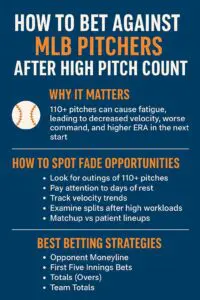
Fade the Ace: How to Bet Against MLB Pitchers After High Pitch Count

In Major League Baseball (MLB), nothing grabs the attention of fans and bettors quite like when an ace pitcher is scheduled to start. These frontline starters often command heavy betting lines because of their track record of shutting down opponents. But even the best arms in baseball have their limits, and pitch count is one of the most important indicators of when fatigue may catch up to them. Understanding how to bet against MLB pitchers after high pitch count can give bettors a unique edge in markets where the public often overvalues star power.
This article will break down the science of pitch counts, why it matters in today’s MLB, how sportsbooks and public perception create exploitable opportunities, and the exact steps you can take to capitalize. By the end, you’ll know not just when to fade a pitcher, but also the smartest ways to structure your bets for long-term profitability.
Why Pitch Count Matters
Pitch count isn’t just a statistic – it’s a direct reflection of workload. Every pitch taxes a pitcher’s shoulder, elbow, and legs. Once a starter crosses the 100-pitch threshold, fatigue begins to impact command and velocity. A tired pitcher might miss their location, elevate fastballs, or lose bite on breaking pitches. These subtle changes give hitters an advantage, even if the ace’s name still carries weight at the sportsbook window.
Modern teams carefully monitor pitch counts. The era of pitchers routinely throwing 120–130 pitches per start has ended. Today, most managers pull starters after 95–105 pitches, even when they’re cruising. When a pitcher exceeds this norm – say 115 or more pitches – it often signals a heavy workload that may linger into their next start.
Defining “High Pitch Count”
Not all pitch counts are equal. What qualifies as “high” depends on context, but most MLB analysts consider 100–105 pitches as the caution zone and 110+ pitches as high stress in today’s game.
Several factors influence how dangerous a high pitch count is:
- Age of the pitcher: A 24-year-old flamethrower may recover faster than a 39-year-old veteran.
- Style of pitching: Strikeout pitchers often rack up pitches quickly, while pitch-to-contact arms can stay efficient.
- Days of rest: A pitcher on a regular five-day schedule is more at risk than one given an extra day off.
- Recent workload: Back-to-back starts with high pitch counts can amplify fatigue.
Because managers typically guard against overuse, any outing above 110 pitches is a red flag worth noting for betting purposes.
The Market’s Blind Spot
Sportsbooks know the public loves betting on star pitchers. When an ace is announced as the starter, oddsmakers shade the line toward his team. This means you’re often paying a premium price to back a big-name arm – even if he’s entering the game with signs of fatigue.
For example, when a Cy Young–caliber pitcher goes past 115 pitches in one start, most recreational bettors don’t consider it a factor in the next outing. They see the name, the ERA, and past accolades. The market often fails to adjust enough for the risk of decline. That disconnect creates opportunity for sharp bettors.
How to Spot Fade Opportunities
Knowing when to fade an ace requires more than glancing at a box score. You need to dig into the numbers and context. Here’s a checklist to guide you. Before diving in, it’s worth noting that each of these points should be seen as pieces of a puzzle – when several align, it’s time to take action.
- Look for Outings of 110+ Pitches
- How to do it: Visit Baseball-Reference or FanGraphs, check the pitcher’s game logs, and look at pitch count totals.
- Why it matters: A single outing above 110 pitches in today’s game is unusual. It signals added stress and often leads to worse command next time out.
- Pay Attention to Days of Rest
- How to do it: Compare the date of the last start with the scheduled start date. If it’s a normal four days’ rest instead of five or six, fatigue risk rises.
- Why it matters: Recovery time is essential. Short rest plus high pitch count compounds risk.
- Track Velocity Trends
- How to do it: Use Statcast (via Baseball Savant) to monitor fastball velocity game to game.
- Why it matters: A dip of 1–2 mph can indicate lingering fatigue, even if surface stats still look strong.
- Examine Splits After High Workloads
- How to do it: Look at career or seasonal performance splits (ERA, WHIP, FIP) in starts immediately following 110+ pitch games. Some pitchers show consistent regression in this scenario.
- Why it matters: Historical data is often the best predictor of future performance.
- Matchup vs Patient Lineups
- How to do it: Check opponent team stats for on-base percentage (OBP) and pitches per plate appearance.
- Why it matters: Patient teams that work counts will force the pitcher to labor more, exposing fatigue faster.
Best Ways to Bet the Fade
Now that you know how to identify opportunities, the next question is how to structure your wagers. Blindly betting the opponent’s moneyline isn’t always the most efficient approach. Here are the top methods, along with how to apply them.
- Opponent Moneyline
- Application: Bet on the underdog when the ace’s team is overpriced.
- Example: If an ace is -180 despite a 118-pitch outing last start, value may lie on the opponent at +160.
- First Five Innings Bets
- Application: Focus on the early game before bullpens take over.
- Why it works: If the starter struggles out of the gate due to fatigue, you cash before the bullpen can settle the game.
- Totals (Overs)
- Application: Bet the game over if you anticipate the ace allowing more runs than usual.
- How to do it: Compare his season average runs allowed to projected runs in betting models.
- Team Totals
- Application: Take the opponent’s team total over, focusing specifically on their offense against the ace.
- Why it works: Even if the bullpen shuts things down later, early runs against the fatigued starter can be enough.
- Player Props
- Application: Bet on opponent hitters to go over hits, total bases, or runs scored.
- How to do it: Target left-handed or right-handed batters who match up well against the ace’s splits.

The Limits of the Strategy
It’s important to recognize the limitations. Not every ace will falter after a high pitch count. Some thrive on heavy workloads, and matchups or external factors (weather, ballpark) can override fatigue signals. That’s why how to bet against MLB pitchers after high pitch count should be one part of a broader betting toolkit, not a standalone system. Always combine it with matchup analysis, bullpen evaluation, and situational betting trends.
Conclusion
Learning how to bet against MLB pitchers after high pitch count offers bettors a way to find hidden value in a market dominated by public perception. By tracking pitch counts, monitoring velocity, and spotting overpriced lines, you can position yourself to profit when an ace is most vulnerable.
Remember, this strategy isn’t about fading talent – it’s about exploiting fatigue and market inefficiencies. Track results, stay disciplined, and use this method as one piece of a larger, evidence-based approach to MLB betting.
Before You Go…
Get Weekly Winning Angles Delivered to You
Enjoy this article? Join the Core Sports Betting newsletter where we break down actionable strategies, betting angles, and real-game insights.
Some of the concepts we touch on each week can evolve into full handicapping systems – the kind you can test, refine, and potentially build into long-term edges.
Simple. Practical. No fluff.
Proven Sports Betting Courses
Looking to go deeper?
Our step-by-step courses are built around structured systems – not guesses or opinions. Each course has been backtested over a minimum of 10 years, giving you a clear understanding of how the strategy has performed over time.
If you’re serious about improving your process, these courses show you exactly how to approach betting with discipline and structure.
Free Betting Calculators to Sharpen Your Edge
Want to make smarter, faster decisions?
Our free tools help you quickly calculate odds, payouts, and true value — without the guesswork.
Try these popular calculators:
- Moneyline Calculator
- Parlay Calculator
- No-Vig Odds Calculator (Find True Odds)
- Kelly Criterion Calculator
→ Visit the Betting Tools Hub to access all calculators
Like this article? Pin it on Pinterest!

More to Explore