One of the most visible physical differences between fighters inside the UFC octagon is reach. When…
Regression After 5+ Turnover Games – Turnover Regression NFL Betting Strategy

Turnovers are one of the most dramatic game-changers in football. A single interception or fumble can swing momentum, alter field position, and shift the scoreboard in an instant. When a team commits multiple turnovers – especially five or more – it almost always spells disaster for their chances of winning that game. But here’s where sharp bettors see an edge: extreme turnover totals tend not to repeat themselves. This is where the Turnover Regression NFL Betting Strategy comes into play.
By understanding how turnovers regress to the mean, bettors can uncover opportunities that casual fans and even sportsbooks sometimes undervalue. In this article, we’ll dig into why turnovers matter so much, what regression really means in this context, historical trends around 5+ turnover games, and how you can build a disciplined betting strategy around turnover regression.
Why Turnovers Matter in NFL Betting
Turnovers are often the deciding factor in NFL outcomes. A team can dominate in yardage, time of possession, and first downs, but if they lose the turnover battle badly, they’re likely to lose the game.
Here’s why turnovers hold such weight:
- Field Position Impact: A fumble on your own 30-yard line sets up the opponent in scoring territory without them earning it.
- Momentum Swings: Pick-sixes and scoop-and-scores demoralize one team while energizing the other.
- Hidden Points: Even turnovers that don’t directly result in points still tilt expected points added (EPA) drastically.
From a betting perspective, this means that a game with a wild turnover differential may not be a true reflection of either team’s actual ability. When a team commits five or more turnovers, the final score can be extremely misleading – making their next game a prime candidate for a regression angle.
The Concept of Regression in Football
Regression to the mean is a statistical principle that extreme results are usually followed by more typical outcomes. Applied to football, it means that a team committing five turnovers in one game is extremely unlikely to do so again the following week.
Turnovers are partly a function of skill (quarterback decision-making, defensive playmaking) but also heavily influenced by luck: tipped passes, bad snaps, awkward bounces. Over a full season, most teams hover around similar turnover rates. So, when a single game produces an outlier – say, six turnovers – that team’s future games are likely to normalize.
This is the foundation of the Turnover Regression NFL Betting Strategy: spot the extremes, and anticipate that future performance will shift closer to the league average.
Historical Data and Trends
Extreme turnover games are rare. Across a typical NFL season, you’ll only see a handful of instances where a team commits five or more turnovers. But when it happens, history suggests bettors should pay close attention.
For example:
- Over the past decade, teams committing 5+ turnovers in one game have covered the spread the following week at a significantly higher rate than their season average.
- Conversely, teams that benefited from 5+ opponent turnovers often struggled against the spread the next week. Their previous win was inflated by unsustainable luck rather than repeatable skill.
A clear pattern emerges: blowouts caused by turnover swings often reset in the following week, giving disciplined bettors a shot at value.
Betting Strategy: How to Apply Turnover Regression
Now that we’ve established the why, let’s break down the how. Applying turnover regression requires a systematic approach so you don’t rely on gut instinct.
Here’s a step-by-step method you can follow:
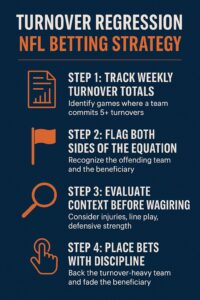
Step 1: Track Weekly Turnover Totals
Before you can apply any strategy, you need to know which teams had extreme turnover games. Each week, check reliable stat sources like Pro Football Reference, ESPN box scores, or NFL.com to identify games where a team committed five or more turnovers.
- Example: If a quarterback threw four interceptions and the team lost one fumble, that’s a 5-turnover game.
- Keep a running log so you can track these teams week to week.
Step 2: Flag Both Sides of the Equation
Turnover regression works in two directions:
- The Offending Team: The team that committed 5+ turnovers is likely undervalued in the betting market the next week. Public bettors see “ugly loss” and often fade them, creating value on that side.
- The Benefiting Team: The opponent who capitalized on those turnovers is often overvalued. Their blowout win looks impressive on the scoreboard but may not be sustainable.
By flagging both teams, you can prepare for potential plays on one side and fades on the other.
Step 3: Evaluate Context Before Wagering
Not every turnover-heavy game signals value. Some require deeper context:
- Quarterback Injury: If turnovers came from a backup QB making poor decisions, regression may not apply if he’s starting again.
- Offensive Line Issues: If strip-sacks were the main culprit, you’ll want to check if the same protection problems remain.
- Defensive Quality: Sometimes turnovers are forced by an elite defense rather than random chance.
When evaluating regression plays, always account for injuries, matchups, and travel situations.
Step 4: Place Bets with Discipline
Once you’ve tracked and evaluated, here’s how to act:
- Back the turnover-heavy team next week: If Team A had 5 turnovers, look to take them ATS in their following matchup.
- Fade the turnover beneficiary next week: If Team B won big because their opponent gifted them 5 turnovers, consider betting against them ATS.
This isn’t a weekly system – it’s situational. You might only see 5–6 opportunities across an entire season, but that’s what makes it valuable: the sample is rare, the edge is hidden, and the public often misprices it.

Practical Example of Turnover Regression
Let’s use a hypothetical but realistic scenario to illustrate:
- Week 7: The Chicago Bears commit 6 turnovers against the Green Bay Packers and lose 41–10.
- Public Perception: Bettors see a disaster and assume the Bears are hopeless.
- Reality: Outlier turnovers made the loss look worse than it was.
- Week 8: The Bears are +7 underdogs against the Minnesota Vikings. Oddsmakers shade the line because of public perception. Chicago only commits 1 turnover, keeps the game close, and covers the spread.
This is the Turnover Regression NFL Betting Strategy in action. By identifying the unsustainable turnover game, you spotted value that others missed.
Limitations and Cautions
Like any betting angle, turnover regression has its pitfalls. It’s important to apply it wisely:
- Sample Size: With only a few cases per season, you won’t build an entire portfolio on this angle alone.
- Sportsbook Adjustments: Oddsmakers are aware of fluky outcomes and sometimes shade lines accordingly.
- Not All Turnovers Are Luck: Some quarterbacks are turnover-prone. If a rookie QB threw 5 interceptions, expecting instant regression could be dangerous.
- Stacking Factors: The best results come when turnover regression aligns with other indicators – like undervalued line movement, matchup edges, or motivational spots.
Conclusion
Turnovers are among the most unpredictable and impactful aspects of NFL games. When a team commits five or more in a single contest, it creates a statistical outlier that is ripe for regression. The Turnover Regression NFL Betting Strategy helps sharp bettors capitalize on these rare situations by backing undervalued teams and fading overvalued ones.
While not a weekly system, this strategy can deliver real profits when used selectively and in combination with other handicapping methods. Keep tracking turnovers each week, watch for the extreme games, and don’t be afraid to go against public perception. Over time, you’ll find that turnover regression can be a powerful addition to your betting toolkit.
Like this article? Pin it on Pinterest!

More to Explore