One of the most visible physical differences between fighters inside the UFC octagon is reach. When…
Social Sentiment Analysis Strategies for Bettors

Sports betting is no longer just about stats, odds, and gut instinct. In today’s digital-first world, millions of fans are voicing their opinions on social media – whether it’s excitement about a star player, frustration over an injury, or speculation about trades and matchups. All that chatter creates a massive stream of data, and savvy bettors have realized they can tap into it. This is where social sentiment analysis strategies for bettors come in. By analyzing how fans, influencers, and even journalists are reacting online, bettors can gauge public mood and potentially spot edges before the sportsbooks adjust.
In this article, we’ll break down exactly what social sentiment analysis is, why platforms like Twitter and Reddit are goldmines for betting insights, and how you can build your own sentiment-driven approach. You’ll not only understand the “what” and “why” but also get step-by-step actions you can take to use sentiment data alongside your betting strategies.
What Is Social Sentiment Analysis and Why It Matters
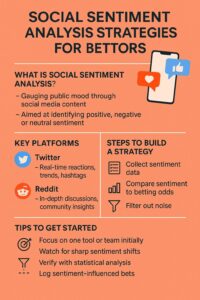
At its core, sentiment analysis is the process of evaluating text – tweets, Reddit posts, Facebook comments, or even blog headlines – to determine the emotional tone: positive, negative, or neutral. For example:
- A surge in tweets saying “Player X is unstoppable” would register as positive sentiment.
- Posts like “This team looks cooked without their star” would show negative sentiment.
For bettors, this matters because:
- Markets move on perception. If public confidence in a team suddenly spikes, sportsbooks might adjust lines quickly to balance action. If you spot that trend earlier, you could lock in value before the odds move.
- Public bias affects betting volume. Casual bettors follow hype. If social sentiment shifts dramatically, you can anticipate where the “square” money will flow and decide whether to ride or fade it.
- Emotional swings create short windows. Injury rumors, trades, or controversies can cause knee-jerk reactions on social media. A disciplined bettor can separate noise from meaningful signals.
Why Twitter and Reddit Are Key Platforms
While all social media matters, two platforms stand out for sports sentiment analysis:
- Twitter (now X): Instant reactions, hashtags for every game, and verified accounts for athletes, journalists, and sportsbooks. It’s the fastest barometer of fan mood.
- Reddit: Longer discussions, subreddit communities like r/sportsbook or team-specific threads, where bettors and fans debate in detail. Reddit tends to highlight deeper insights and market psychology.
Together, these platforms give you both speed (Twitter) and depth (Reddit)—two critical angles for bettors who want to harness sentiment.
Tools and Methods for Social Sentiment Analysis
Before jumping into lists of tools, let’s explain what makes them valuable. A good tool saves time by scanning thousands of posts, filtering relevant content, and assigning sentiment scores (positive/negative/neutral). Instead of manually scrolling for hours, you get a clean snapshot of the mood around a player, team, or game.
Here are a few popular ways to get started:
- Social Listening Platforms
- Tools like Hootsuite Insights, Awario, or Talkwalker can monitor hashtags (#NFL, #NBAFinals), player names, or team nicknames.
- They’ll show sentiment trends over time, highlight spikes in chatter, and flag whether the tone is mostly positive or negative.
- How to use it: Set up a project tracking one or two teams you regularly bet on. Track their sentiment during a week and compare it to how betting lines shift. Look for correlations.
- Free Tools & APIs
- Services like Google Cloud Natural Language API or VADER Sentiment (Python library) allow you to run your own analysis on tweets.
- How to use it: Collect tweets with a hashtag like #Lakers, feed them into VADER, and analyze average sentiment. This takes more setup but gives you more control.
- Manual Monitoring (Beginner-Friendly)
- Even without fancy tools, you can manually scan trending hashtags during big games.
- How to use it: During NFL Sundays, pick a team hashtag (#ChiefsKingdom), scroll for 10 minutes before kickoff, and note whether the mood feels overly optimistic or panicked. This quick pulse can sometimes alert you to narratives sportsbooks haven’t fully priced in.
By starting with one of these approaches, you can gradually scale your sentiment analysis to be as sophisticated as you want.
Step-by-Step: Building Your Sentiment-Driven Betting Strategy
Instead of just giving tips, let’s outline a process you can follow. Think of this as a “starter playbook” for using social sentiment analysis strategies for bettors in real-world betting.
Step 1: Pick a Target Market
- Start small – choose a league or even one team you follow closely.
- Example: Focus on NBA games featuring the Lakers for a month.
Step 2: Collect Sentiment Data
- Use Twitter hashtags (#Lakers, #NBA), track Reddit threads (game-day discussions).
- Write down whether the mood skews positive or negative.
- If using tools, screenshot charts showing sentiment spikes.
Step 3: Compare Sentiment to Odds Movement
- Before you place a bet, check whether sportsbooks are moving lines in the same direction as sentiment.
- Example: If social media explodes with “LeBron looks injured” talk, but the line hasn’t shifted yet, you may have an early edge.
Step 4: Filter Out Noise
- Don’t chase every spike. Look for consistent sentiment trends across multiple accounts or platforms.
- Bots, trolls, or meme accounts can distort reality – verify through multiple sources.
Step 5: Test and Track
- Keep a record: Track 20–30 bets where sentiment played a role. Did it help? Did it mislead you?
- Over time, refine rules: maybe you only act when sentiment spikes 30%+ compared to baseline.
Examples of Sentiment in Action
Let’s look at how this might play out in different sports:
- NFL Example: On game day, rumors of a quarterback’s flu spread across Twitter. Sentiment around his team drops sharply negative. You notice sportsbooks are slow to adjust. Betting the under on his team before odds shift could lock in value.
- NBA Example: Reddit threads start buzzing about a rookie’s breakout performance. Sentiment grows positive across multiple threads. This hype may push casual bettors toward overs on his point total—creating potential value on the under if you believe markets are overreacting.
- MMA Example: Before a fight, Twitter sentiment explodes with fans doubting a fighter after a leaked training video. Sportsbooks eventually adjust the line, but early bettors using sentiment analysis were ahead of the curve.
These examples show sentiment can act as an early warning system – but only if you learn to separate signal from noise.

Risks, Pitfalls, and Ethics
Before you jump in head-first, it’s important to understand the downsides:
- False Rumors: Not every injury or trade rumor on Twitter is true. Always double-check with reliable reporters before making a big wager.
- Bot Distortion: Automated accounts can artificially pump up sentiment. Use multiple sources to verify.
- Overreliance: Sentiment should be one tool in your toolbox – not the only factor. Blend it with stats, matchup analysis, and bankroll discipline.
- Ethics: Don’t misuse private info or manipulate social sentiment yourself. Stick to publicly available chatter.
The smartest bettors are those who treat sentiment as a complement to data, not a replacement.
Actionable Tips to Get Started
Before diving into the list of practical steps, let’s clarify why you need an action plan. Social sentiment analysis can be overwhelming—thousands of tweets per minute, multiple platforms, constant noise. Having a structured routine will keep you disciplined and ensure you use sentiment as a helpful signal rather than a distraction.
Here are some tips you can start applying right away:
- Choose one tool and stick with it. Don’t juggle five platforms. Start with Hootsuite or even manual monitoring for one team. Build consistency.
- Look for sharp mood swings. Steady chatter is less useful; sudden spikes in positive/negative sentiment are where opportunities lie.
- Cross-check sentiment with stats. If sentiment says “Team X is unstoppable” but stats show a weak defense, be cautious. Use both.
- Track ROI. Create a spreadsheet logging bets influenced by sentiment. Note win/loss and whether sentiment aligned with results. This will tell you if the strategy is adding real value.
By following these steps, you’ll avoid the trap of chasing hype and instead build a repeatable, testable betting process.
Conclusion
Social media isn’t just noise – it’s a mirror of public perception that can shape betting markets in real time. By applying social sentiment analysis strategies for bettors, you can identify opportunities before sportsbooks fully adjust, anticipate public betting bias, and add a modern edge to your handicapping toolkit.
The key is discipline: track sentiment systematically, filter out false signals, and blend it with your existing strategies. Start small – maybe track one team’s sentiment for a week – and you’ll quickly see patterns emerge. Done right, sentiment analysis can shift from a gimmick into a genuine betting advantage.
Like this article? Pin it on Pinterest!

More to Explore