One of the most visible physical differences between fighters inside the UFC octagon is reach. When…
How Takedown Defense Predicts UFC Upsets
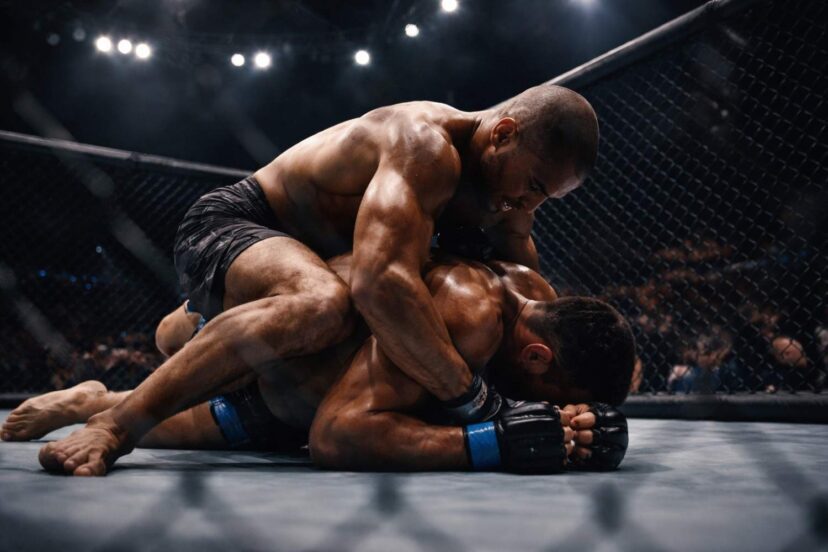
In every UFC event, there are one or two underdogs whose wins surprise the betting public but not the bettors who study stylistic matchups closely. One of the most consistent predictors of those surprise outcomes is takedown defense. Understanding how takedown defense predicts UFC upsets gives bettors a rare edge because it exposes when a favored wrestler may not have the tools to enforce their game plan. Many fans assume grapplers automatically dominate strikers, but the data – and thousands of hours of fight tape – tell a more nuanced story. When a striker has elite hips, disciplined footwork, and consistent first-layer defense, the wrestler’s most reliable path to victory suddenly becomes less reliable. And when that path is weakened, the betting line is often wrong.
This article explores in depth why takedown defense matters, which elements of defensive grappling really drive upset potential, how to evaluate true TDD beyond the simple percentages listed on UFCStats, and how bettors can combine statistics with targeted tape study to accurately anticipate undervalued underdogs. You’ll learn the real mechanics behind defensive wrestling, the hidden flaws in wrestling-heavy favorites, and the ways sportsbooks quietly shade lines toward grapplers – creating opportunities when the matchup says otherwise. By the end, you’ll understand exactly how takedown defense predicts UFC upsets and how to incorporate it into a repeatable, disciplined betting process.
Why Wrestlers Often Drive Betting Lines
Sportsbooks understand how bettors think, and they know that casual bettors overvalue wrestling dominance. A fighter with strong takedown ability is perceived as “safer,” because controlling an opponent on the ground reduces variables like striking variance, power shots, and judging inconsistency. As a result, wrestling-oriented fighters often open – and stay – as favorites even when they face stylistic dangers.
This creates a unique dynamic: the betting line frequently reflects the idea of wrestling dominance rather than the reality of whether that wrestling can work in this specific matchup. If a grappler has predictable shot entries, struggles to cut the cage, or slows after five or six attempted takedowns, the stylistic advantage evaporates quickly. Yet the price on the betting board rarely reflects that fragility. This is why so many UFC upsets occur in fights where the favorite is a grappler who simply can’t keep the fight in their world.
And whenever that happens, takedown defense – not striking advantage – is usually the root cause. A striker doesn’t need to “win” the wrestling to win the fight; they only need to stop the wrestler from winning it. This subtle but powerful distinction is the foundation of why elite takedown defense consistently predicts undervalued underdogs.
The Mechanics and Math Behind Takedown Defense
Takedown defense (TDD) is often misunderstood because fans rely heavily on the percentage listed on UFCStats.com. The official formula is simple: TDD is calculated as the number of defended takedowns divided by the total number of attempted takedowns against that fighter. But like many combat metrics, the simplicity hides serious limitations.
A 75% TDD rate can be inflated if a fighter has only faced a handful of attempts, or if those attempts came from low-level wrestlers. Conversely, a fighter with a 50% TDD rate might actually be an elite defender if they’ve spent most of their career fighting high-pressure grapplers constantly shooting. The percentage also ignores context: Were the takedown attempts from open space or against the cage? Were they reactive shots, desperation shots, or clean entries? Did the defender recover position quickly, or did they lose cage real estate even when defending?
A fighter who defends a takedown but gets pinned to the fence for 40 seconds is technically successful yet positionally compromised. Another fighter may stuff an attempt, circle off the cage, and land counters immediately. Both defended the takedown, but only one turned that defense into winning actions.
Understanding these nuances is essential to grasping how takedown defense predicts UFC upsets, because the fighter who forces the bout to unfold in their preferred space – whether that’s at range, in the pocket, or in scrambles – often defies the betting line.
How Takedown Defense Predicts UFC Upsets
The relationship between takedown defense and upsets becomes clear when you examine why underdogs win. Underdogs win when they prevent the favorite from winning in their preferred domain. This almost always occurs in fights where a supposed “dominant wrestler” discovers that the underdog’s defensive grappling is far stronger, faster, and more energy-efficient than expected.
To understand this relationship, consider how a wrestler’s game plan dissolves when their first three or four takedowns fail. Wrestling is one of the most energy-intensive styles in MMA. Every shot requires explosive hips, sustained drive, and a heavy load on the legs. Each failed shot burns significantly more energy than a successful one. When a wrestler’s entries get stuffed early, their cardio pool drains rapidly. As fatigue builds, entries become slower, setups fade, and distance closes less effectively. This is when underdogs take over – often late in the second or third round – because once the wrestler cannot wrestle, the striker suddenly has a clear and sustainable winning path.
Another overlooked factor is the psychological shift. When a wrestler realizes they cannot secure takedowns, panic behavior often appears: rushed entries, bad angles, overcommitted punches, or retreating footwork. A striker with strong TDD typically punishes these mistakes with counters or movement that frustrates the wrestler further. The betting market rarely accounts for this chain reaction. It prices the favorite as if wrestling is guaranteed. But when wrestling fails, the line is dead wrong.
This is the essence of how takedown defense predicts UFC upsets, and you’ll see its fingerprint on hundreds of underdog wins across modern UFC history – even though the public rarely discusses it as the leading cause.
Situations Where Strong Takedown Defense Flips the Matchup
Before jumping into specific patterns, it helps to understand why these patterns matter. Takedown defense is not a single skill but a collection of reactions, decisions, and athletic qualities that work together. Understanding when these qualities are likely to overwhelm a wrestler’s strengths allows bettors to anticipate underdog victories.
Here are several situations that frequently swing the fight toward the fighter with superior TDD – even when the betting odds heavily favor the wrestler.
- When the wrestler relies on straight-line entries – Wrestlers who shoot double legs from far away, without feints or level-change setups, are especially vulnerable. A disciplined striker with quick hips only needs one or two early reads to time the defense. Once they “get the rhythm,” the takedown threat collapses. This dynamic has produced countless upsets because dominant college wrestlers often struggle to adapt their entries to high-level MMA striking.
- When the fight takes place in the big octagon rather than the small cage – The larger UFC cage gives elusive fighters far more room to circle, angle out, and reset distance. Since strangling space is essential for takedown setups, elite TDD becomes even more powerful in the 30-foot cage. This advantage isn’t always reflected in the betting line.
- When the striker punishes failed shots – The most effective takedown defenders don’t just avoid the mat – they make the wrestler pay. Whether it’s uppercuts, knees, or body shots during failed entries, these counters multiply the wrestler’s exhaustion. Once punished, wrestlers often abandon the game plan entirely, opening the door for underdogs to dominate exchanges.
- When the defensive fighter uses underhooks expertly – Underhooks are the backbone of MMA takedown defense. Fighters who immediately dig underhooks after contact neutralize cage pressure, force separation, and reset distance. Many bettors underestimate how much this single mechanical detail determines whether the fight becomes a striking match.
- When the wrestler slows down late – Even great wrestlers with excellent conditioning can fatigue when they face high-output strikers or defend heavy leg kicks. Takedown defense shines brightest in round three, where many underdogs steal fights because the wrestler’s entries are no longer threatening.
These scenarios illustrate why analyzing TDD properly provides an enormous advantage. Understanding the context of takedown defense – not just the numbers – reveals when an underdog has a legitimate chance of controlling the style of the fight.

How to Analyze Takedown Defense Before Betting
Evaluating takedown defense requires more than scanning percentages. Bettors who consistently profit pay attention to the mechanics of the fight. The process is not difficult, but it does require discipline and a clear framework.
Start by identifying the core question of the matchup: Can the wrestler impose their game plan? If the answer is uncertain, the matchup is instantly more competitive than the odds suggest. From there, the evaluation involves watching how each fighter performs in high-pressure sequences.
One of the most effective ways to judge TDD is by watching the first three minutes of an opponent’s previous fights. These early sequences reveal whether the defensive fighter can stop clean entries, whether they recover position quickly, and whether panic or rushed reactions appear during scrambles. Pay close attention to how easily the defender is pushed against the fence. Fighters who maintain space effectively are far less likely to get taken down consistently.
Next, evaluate how the wrestler sets up takedowns. Are they shooting from the logo, or are they using feints and strikes to disguise entries? Do they rely heavily on clinch takedowns, or are they chain-wrestlers who continuously transition from single to double to body lock? This matters because certain takedown styles match up poorly with certain types of defenders.
Then look at fatigue. Does the defender’s technique degrade late? Or do they become harder to take down as the fight progresses? This often separates contenders from highly inflated favorites.
Where to Find Reliable Takedown Defense Data
You can get basic TDD data from several online sources, but none of them tell the full story. UFCStats.com provides official percentages, attempt counts, and control time. ESPN’s MMA pages sometimes include simplified stats and fight summaries. FightMetric, which powers UFCStats, offers the most accurate numerical view available publicly.
However, no website (that I am aware of) captures the quality of attempts, the scramble outcomes, or the nuances of defensive posture. This is why tape study is irreplaceable. You must watch at least a few minutes of fight footage to see the truth: whether the defender counters effectively, whether scrambles favor one fighter consistently, and whether the wrestler’s entries break down at predictable moments.
In short, reliable takedown defense analysis requires both stats and film. The numbers guide you toward potential matchups, but the film shows you how those numbers were created. Many bettors rely entirely on one or the other, which is why so many underestimate the power of defensive grappling in predicting upsets.
A Step-By-Step Blueprint for Using TDD in UFC Betting
Once you’ve gathered the stats and watched a reasonable amount of film, the final piece is integrating the analysis into a betting decision. Start by comparing both fighters’ historical performance against similar styles. If a striker has consistently handled wrestlers with similar approaches, this is a major signal. If the wrestler has struggled to hold down explosive or long-limbed opponents in the past, that also matters.
Then map out the likely round-by-round dynamic. Will the wrestler have their best chance early? Will the striker take over late? This matters for moneyline bets, over/unders, and live betting opportunities. Finally, consider the psychological component: fighters who get discouraged when takedowns fail often collapse quickly. Fighters who stay composed and confident even when pressured tend to create late-round momentum swings.
When you apply this process consistently, you begin to see upsets not as random surprises but as predictable outcomes rooted in stylistic mismatches.
Conclusion
Takedown defense is one of the most underestimated metrics in UFC betting and one of the strongest indicators of upset potential. When you understand how takedown defense predicts UFC upsets, the betting board looks very different. Many favorites rely on wrestling as their primary path to victory, and when that path is shut down, the entire fight flips. By combining intelligent stat analysis with focused film study, bettors can spot undervalued underdogs long before the public catches on.
Like this article? Pin it on Pinterest!

More to Explore